
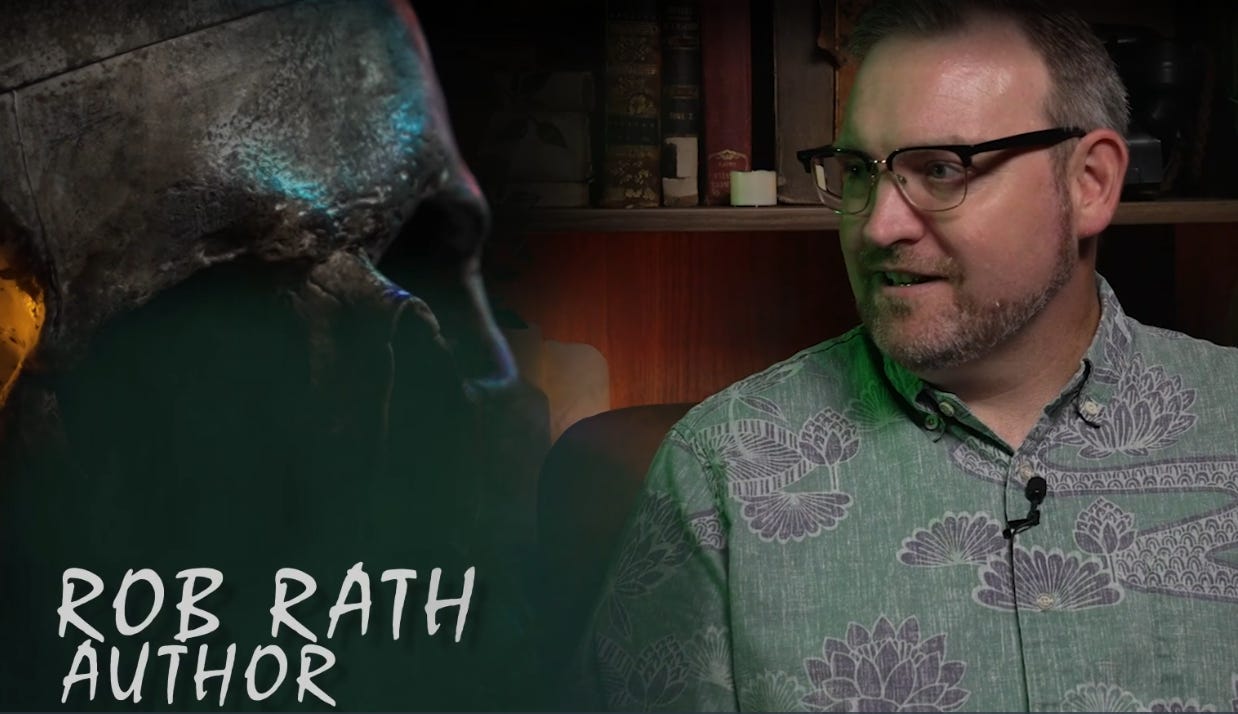
Welcome to the newest occasional series here on the Warhammer Wordforge, The Writer Files. A companion piece to WarhammerTV’s Scribes & Scriveners show, we’ll share highlights from that interview as well as look at the writer and their Black Library history.
This month we’re looking at man of the moment Robert Rath, whose surprise sequel The Wicked and the Warped (review) earlier this year successfully managed to hold its own against the high expectations and near-universal acclaim of the original The Infinite and the Divine. The latter book recently saw his first entry into the Black Library Readers’ Hall of Fame, and he is also scheduled to appear at next month’s Black Library Live! He’s had something of a privileged run in the Black Library- each of his four novels have been released in deluxe editions- and he took time out to sit with Alex Doddy for this month’s Scribes & Scriveners interview on WarhammerTV.
Like previously-profiled authors Mike Vincent and Marc Collins, Rath arrived at the Black Library through the open submissions process. As usual, an interview with the terrific Track of Words gives us plenty of insight on his journey. “I’ve either submitted or tried to submit every year the submissions window has been open,” he noted, “but often I’d work up a pitch, be unhappy with it, and either get busy and forget to submit it or decide not to send it. In fact, that almost happened with my entry that got chosen!”
“I really loved the [submission] guidelines, since I think it shook people out of their normal holding patterns and caused them to come up with stories they wouldn’t have considered before – which has made the Inferno! anthologies really rich and exciting.
“After reading the guidelines, I decided to pitch a crime fiction story – a genre I like a lot, and that has a recognizable enough style that I could demonstrate my ability to write it in a short sample.
“In the end I had two pitches, but only enough time to write a sample for one, so I chose the pitch that I thought would be the most unusual and eye-catching.”
It’s always fun to note how many Black Library authors were genuine fans of Warhammer well before they came to contribute stories of their own1, and Rath is no exception. As he told Track of Words, “I’ve been reading Black Library since the original Inferno! days, and can still point out the bus stop I was sitting at when, as a high school freshman, I finished reading First and Only. The closing chapter was so exciting, I flipped back to the beginning and started the whole thing again. From that moment, I knew that working with the Black Library had become a career goal.”
Since getting his start in 2019 with the Age of Sigmar short story The Garden of Mortal Delights, Rath has seen four of his novels
Here’s a quick walk through his novel portfolio.
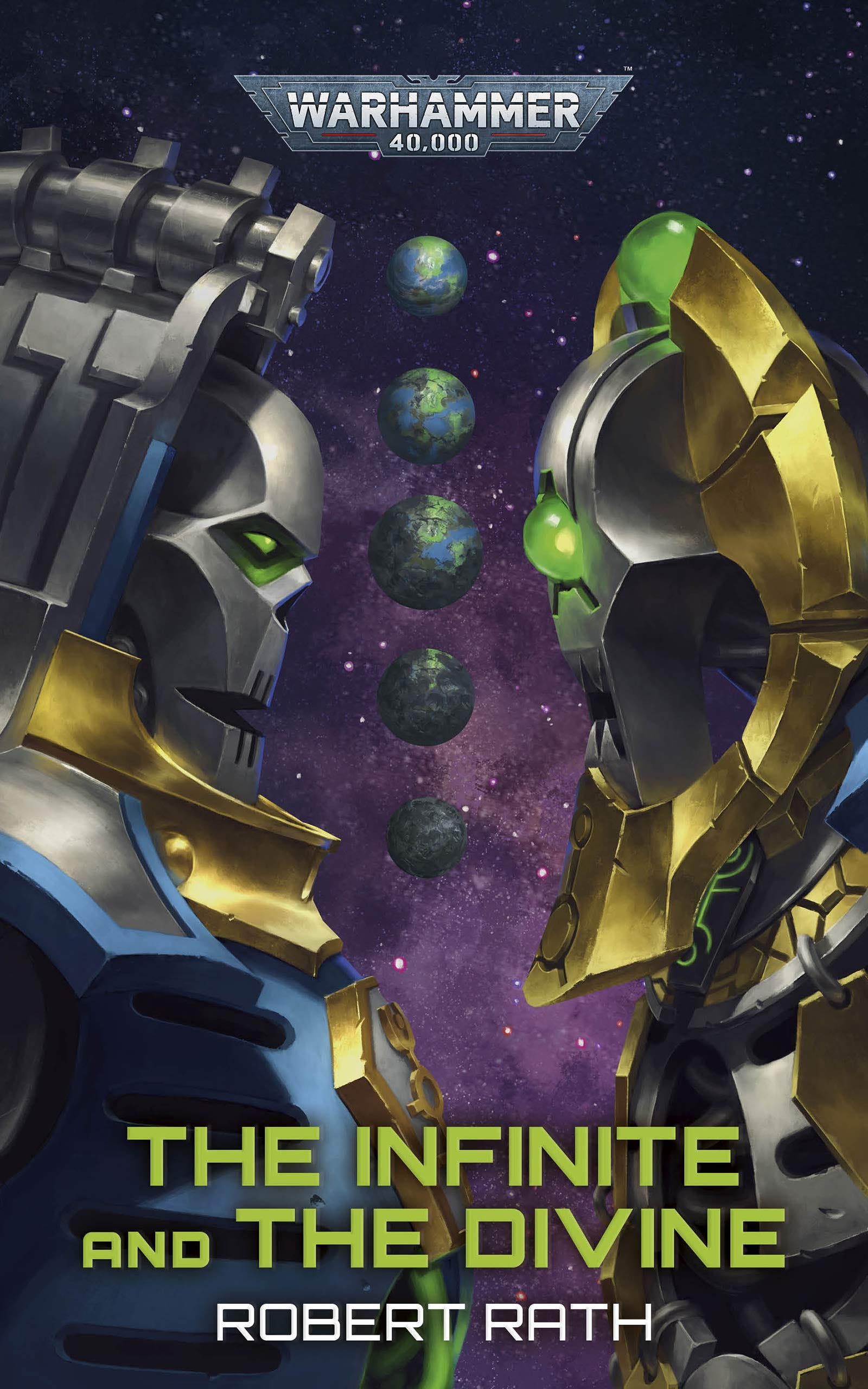
The Infinite and the Divine
Publication: October 10, 2020
Logline: Trazyn the Infinite and Orikan the Diviner are opposites. Each is obsessed with their own speciality, and their rivalry spans millennia. Yet together, they may hold the secret to saving the necron race…
It’s hard to imagine a bigger statement than opening with a masterpiece as your debut novel, but Rath’s The Infinite and the Divine deserves the appellation. Here’s the induction writeup I gave it when it recently entered the Black Library Readers’ Hall of Fame.
“This is the perfect example of a book that hits the ‘trifecta’ of being historically, culturally, and aesthetically significant. Historically, it’s been a massive success, a strong statement of intent for then-debutante Robert Rath that eventually dethroned Dan Abnett’s Horus Rising at Warhammer World for ‘top book.’
“Culturally it not only pushed out the envelope on Necron character work, but it opened up a new avenue for grimdark humor that had largely been the purview of the Orks and Commissar Ciaphas Cain. And aesthetically, it’s masterfully written, a perfect balance of humor and earnestness that even conceals an absolutely clever word-puzzle reveal. The Infinite and the Divine was destined for this.”
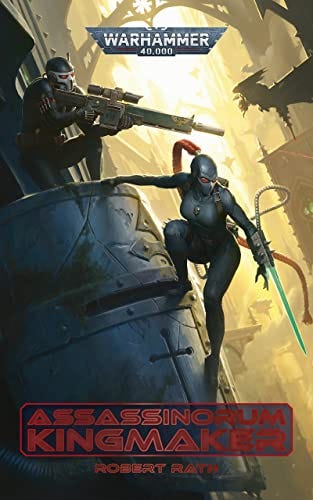
Assassinorum: Kingmaker
Publication: March 26, 2022
Logline: On the Knight World of Dominion, a Vindicare and a Callidus Assassin are tasked with eliminating a seditious leader and safely steering a pro-Imperial candidate to the throne.
If Rath seemed audacious with his debut novel, it certainly wasn’t a on-off as this ambitious genre mash-up proved. Combining elements of a Mission: Impossible style movie with a Feudal World filled with giant mecha (Titans), this was a landmark book and cemented Rath’s ability to write compelling, non-Astartes-centered stories.
A couple of weeks ago, I noted that there was some cause to believe we’d soon be getting a sequel to this one as well, so if you enjoyed the first one, it might be time to buckle in.
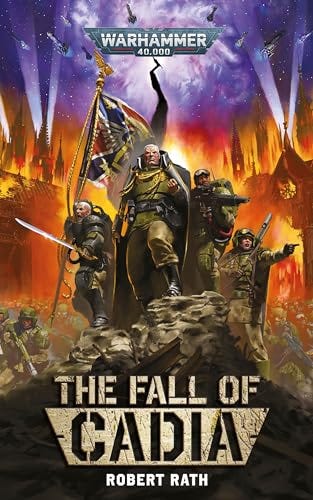
The Fall of Cadia
Publication: August 12, 2023
Logline: Cadia. This proud world stood defiant for centuries – a bulwark against the forces of Chaos residing in the Eye of Terror. All of this would change when it was targeted for destruction by Abaddon the Despoiler as part of his Thirteenth Black Crusade.
Given his track record of success, it was little surprise that Rath was then handed one of the universe’s most consequential events of the modern era. While previosuly contained within the Gathering Storm: Fall of Cadia tabletop campaign book, Rath took on the challenge to craft a resonant, memorable paean to the character of Cadia.
While Rath can’t get all the credit, combined with David Seddon’s extraordinary narration the audiobook of The Fall of Cadia is easily the greatest audiobook I have ever read. Absolute peak cinema.
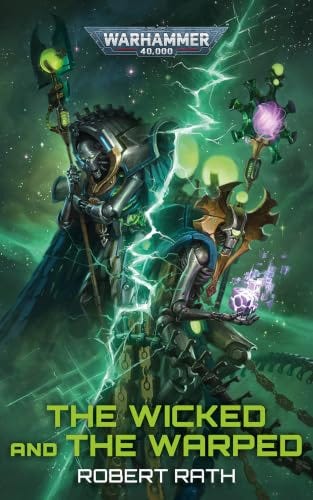
The Wicked and the Warped
Publication: August 15, 2026
Logline: Trazyn the Infinite and Orikan the Diviner return, continuing their rivalry for better or worse. Fate has given them a gift – an ancient world from the necrons' past has returned, but uncovering its secrets may prove more difficult than they anticipated.
With The Infinite and the Divine’s ending, Rath had kept the door open to a return to the exploits of Trazyn the Infinite and Orikan the Diviner, and this year it dropped out of nowhere. Thus far it has been terrifically well-received, and already the question’s been asked… will there be a third?
The ending- once again- certainly leaves that tantalizingly open.
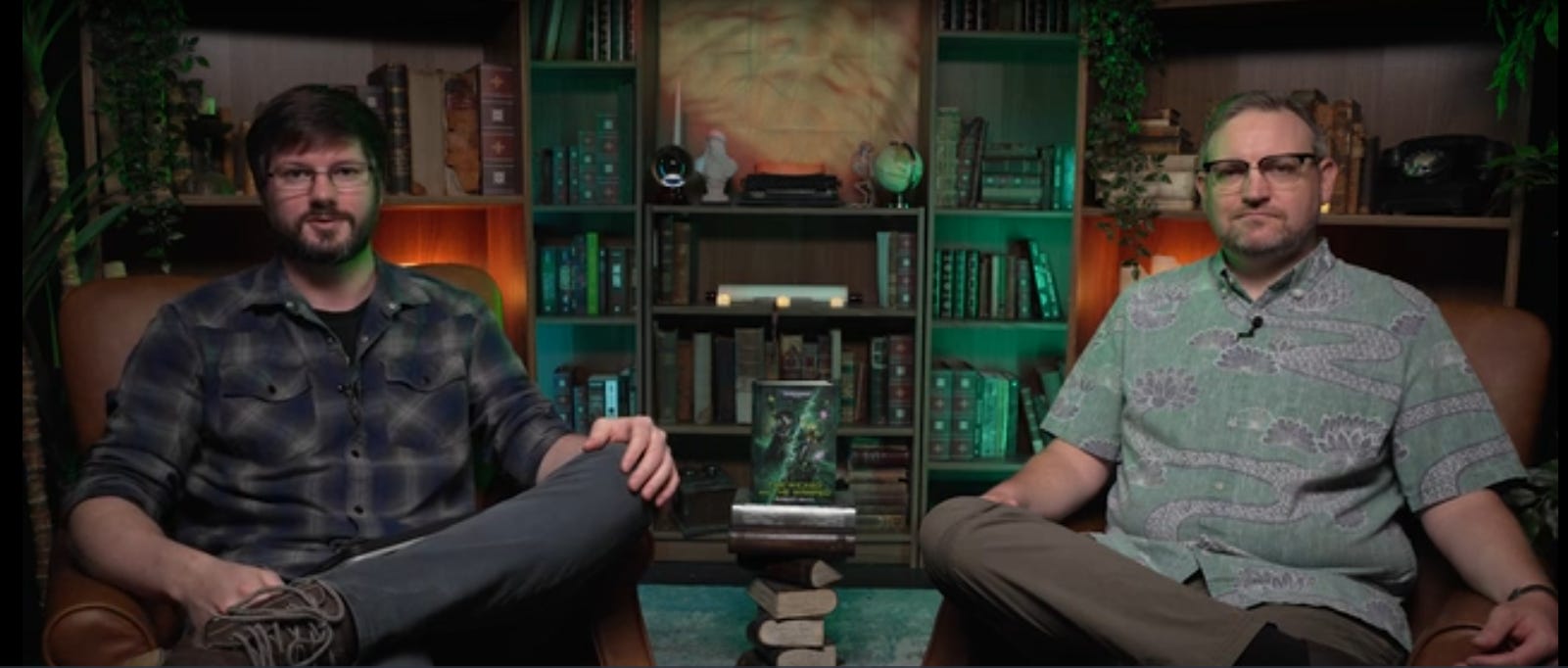
Rath on Scribes & Scriveners
Finally, this month Rath was hosted on Scribes & Scriveners, the occasional author interview series that’s generally timed around a recent or imminent book release. Here’s a brief summary of their conversation.
Alex: So today we’re going to be discussing The Wicked and the Warped, the sequel to The Infinite and the Divine, an amazing fan favorite bestseller. And you mentioned before that you know The Infinite and the Divine was sort of like a, you-just-started-and-couldn’t-stop kind of novel. Why write a sequel, and why bring it straight back to those two, Trazyn and Orikan?
“I’d always intended to write a sequel to The Infinite and Divine,” notes Rath, “that’s why I ended it the way that I did, and I always knew it was going to involve going into the warp in some capacity.”
For Rath, Wicked was more than just a new story, but rather a way to use his two characters as a lens to examine more about the Necron perspective. Infinite dealt with time, and specifically the timelessness of the Necrons’ immortality. For Wicked, that lens would be trained within rather than without, on “metaphysics and the soul.”
“And,” he says, “I just thought it would be very fun to put them through all sorts of weirdo shenanigans in the warp.”
Alex: Their relationship. It would be fair to say they should never be allowed anywhere near each other again. How do you write that kind of relationship when, you know, it’s deeply unhealthy, and yet you manage to keep it so fresh?
Rath goes into his writing process here, and it’s very interesting. The first thing he starts with when writing a book isn’t plotting but rather dialogue. He says that he’ll often envision dialogue in his head, sometimes in the form of a talk show where his characters are interviewed on all manner of things. From that process interesting bits emerge, ready to be woven into the story.
With regards to the dynamic of their relationship, Rath goes on:
“I think that Trazyn and Orikan are kind of like a paradox in that they’re very unhealthy together, but they’re also very unhealthy apart and alone. And you know when they get together, there are these highs of their relationship that are very high, but then frequently, even when they’re getting along, there’s this kind of low-level tension between them.
“I like capturing that. I don’t have to work to make it fresh. For some reason, these characters just when they talk in my head, it’s always fresh every time, and they can always find something new to bicker about. And I think the I think the bickering is in a weird way part of their relationship, in that they both enjoy it.”
Alex: They both have victories. They both have defeats in many ways. Do you have a favorite between the two of them?
“I love writing both of them,” he replies, “and I think aspects of my personality have gone into both of them.” Rath notes that he doesn’t share Trazyn’s penchant for collection, but they’re alike in other ways. “If someone visits me, I will essentially kidnap them and be like, I’m going to show you every cool thing about this place, and you don’t have any say in it at all. We’re we’re gonna go, and we’re gonna have a fun time.”
Still, he adds, “I do feel like I put a little bit more of myself into Orikan just because he was less defined when I took over writing him. He hadn’t been in a book. It was really just codex entries.” For Rath, Orikan is a version of his teenage self. “I’m drawing on that kind of slightly that like teenage sarcasm kind of I’m against the world, kind of thing. That teenage angst that he hasn’t quite grown out of.”
Alex: So alongside them too, we’ve obviously got the executioner, but we’ve also got Inquisitor Helynna, why bring her back?
Rath points to the Inquisitor’s presence in the lore, specifically the “very famous” letter sent to her.
Rabbit Hole: Trazyn’s Letter to Inquisitor Valeria
The letter Rath refers to here was a bit of sidebar lore contained in the 5th Edition Codex: Necrons, published in 2011. It’s notable not only for being Trazyn’s debut, but also for instantly establishing the character’s tone and humor. You can find a narrated recording of it here (it’s only two minutes long, and well worth a listen).
The problem with Inquisitor (Helynna) Valeria, Rath notes, was that she was already dead, killed by Inquisitor Greyfax for her treachery. Thanks to Trazyn’s ability to freeze time, however, Rath managed to ‘save’ her at the instant of death in his 2021 short story Mindshackle, which left open the possibility of her return here.
Having Valeria as a main character in Warped allowed Rath to illustrated the human perspective on Necrons, just as Infinite gave us the Necron perspective on humans. Turnabout is fair play, after all! Of course, at first the only Necron Valeria has really known is Trazyn, opening up an interesting dimension of the book.
“As she works more with Philias and Orikan, she’s kind of realizing that ‘oh… Trazyn is weird.’ It would be kind of like an alien coming to live with a rock star and being like, this is what human life is like, you know. She hasn’t learned about Necrons, she’s learned about Trazyn.
“I also thought it would be really cool to explore an Ordo Xenos radical, because we haven’t seen quite as much of that. We’ve seen a lot of Hereticus radicals and Malleus radicals.
“But I wanted to think about what that would look like, and what would lead someone to become that. Her parents were rogue traders, and she grew up seeing them deal with xenos races on occasion. That way, we could kind of capture both the wonder and horror of that, from sort of a child’s perspective of then going into an institution where, like, no, that’s very not normal.
“Clearly she’s harbored all along this thing of ‘we can actually have different relationships with other species in the galaxy,’ though obviously you have to be very careful.”
Alex: Does that also play into a lot of the descriptions of the things in Trazyn’s collection? Like when you talk about the guy on a motorcycle driving up the walls, and you instantly think, ‘Ooh, could that be Doomrider?’ Is that something that plays into all of that?
Rath shares that while there’s definitely a Doomrider display in Trazyn’s gallery, it’s uncertain as to whether or not that’s the actual Doomrider.
“Who knows?,” he asks. “That’s one of the reasons that he’s so fun to play with. If you see something very valuable and unique in the gallery, is it really that thing, or are you going to get there and wrest it from [Trazyn’s] control and find out it’s just something else?” Rath points to Infinite here, noting that when Orikan broke into the galleries to steal the Astarium Mysterios, Trazyn (mistakenly, as it turns out) thought it was fake.
“I just really love, you know, throwing things in from old lore,” he adds, “but also just making things up.”
Rabbit Hole: Doomrider
This is a perfect example of just how meticulous Rath can be in weaving the lore in light Easter eggs, and unless you’re a walking encyclopedia of Warhammer lore then they can be fiendishly easy to miss.
Doomrider is a Daemon Prince of Slaanesh, first introduced in 1999’s Codex: Chaos Space Marines and then fleshed out in the pages of White Dwarf #235 that July. Think Marvel’s Ghost Rider, but instead of being a vigilante he’s a transformed Astartes of the Emperor’s Children who can randomly appear, cause mayhem, and then vanish from the battlefield.
While he was replaced in the Codex in the 2002 printing, which instead offered up Lucius the Eternal as Slaanesh’s special character, he faded into obscurity but never quite disappeared.
A decade later, Doomrider reappeared as the antagonist in Master of the Hunt, the audio drama written by Josh Reynolds (Grim Harvest, Soul Wars). Six years later, he pops up again- this time in 9th Edition’s Codex: Necrons, which notes that amongst Trazyn’s galleries on Solemnace is one called Doomrider's Folly.
When Rath notes the uncertainty around whether that’s the real Doomrider or not, it’s impossible to say. After all, this past May in White Dwarf #525, there’s a short blurb about Ork Warboss Wazdakka Gutsmek pursuing an unnamed figure matching Doomrider’s description, so as Fox Mulder always said, the truth is out there.
Rath goes on to talk about the opportunities for storytelling that come from lore ambiguity, pointing out how that resulted in one of the gallery exhibits touched on in Wicked, the “War of the Thumbs.” He tells the story of the time he and a number of other Black Library authors all did the Warhammer-themed escape room in Nottingham, Immaterium2. At the end of the experience they all lined up for a pic, each of them displaying a slightly different variation of the Aquila.
Rath- himself a very keen student of history34- immediately saw this as a exactly the kind of small doctrinal or practical variation that could lead to a major religious schism5.
Alex: Trazyn, Orikan, they both contain elements of immortality beyond typical Necrons. Orikan being able to move time, Trazyn being able to jump from body to body, something that comes back to haunt him in this when he finds himself in the destroyer form. How much is the book about mortality? Because you mentioned that the previous one was very much about living forever.
Rath spoke here about mixing things up by denying his two principals access to their strongest powers. “You know,” he says, “Orikan cannot go back over his own timeline. Trazyn can’t just be stashing stuff in dimensional pockets all the time. He doesn’t have armies and tesseract vaults to be throwing around, and that was partially to make sure that this was a separate book that didn’t feel too similar.”
Instead, what he wanted to be able to do here was to strip the characters down to their essential nature, “and there’s definitely a fear of mortality there.”
“But I think that what really gets heightened in the warp is perspective, this theme that the person that you perceive might not be reality. That’s your idea of that person, and what they are, and what they want, and what they’re like... and your vision of yourself might not be accurate.
“And you frequently need other people to see you and express that to you, and if you’re going to accept that or not, right?
“Sannet gets put in a position where people literally cannot see him, and the villain- very on the nose- is like a mound of eyes and sense organs and stuff like that. So it’s a book I think about like seeing and perception, but perception of others and perception of the self, and I think it’s a lot about how you build your personality and how you build your ideas of other people- and then how you change that.
“You know, when you have to have to let in other people’s perspectives to sort of shake the foundations of what you think of someone, and that’s why Trazyn and Orikan’s relationship is so valuable. It’s that Trazyn doesn’t listen to anyone else except Orikan.”
Rath then moves the perspective to the personal, looking within the characters and what their existence means to their sense of self. “If you’re an overlord, you’ve maintained all of your personality. Well, at least you think you have. You’re surrounded by Crypteks. They’ve maintained most of their personality [too], but the vast majority of Necrons have lost most of themselves in the biotransference.”
“After 100 years, 1000 years, a million years, how lonely are these two, basically?
For Trazyn, Rath notes, collecting people becomes a way of having captive friends, “or pets, perhaps, is a better way of putting it.” Orikan, on the other hand, functions much better on his own. “He’s very functional alone- but I don’t think he’s very healthy alone.”
Alex: You mentioned keeping people as pets. One of my favorite parts of the book, and it’s just a small section, is when Helynna obviously needs food, being a human being, and Trazyn goes around and he collects a bunch of stuff from different exhibits, and he’s like, ‘I found you bars and these things, these big, essentially big sugar cubes. Like he’s looking after a horse or something.
Rath notes this scene highlights how Trazyn knows quite a bit less about humans than he thinks he does or pretends to. Inquisitor Valeria “kind of has to humor him. She doesn’t she doesn’t correct him. She just kind of says, ‘Oh, thank you very much,’ and then goes and gets some food herself.”
This is part of what he enjoyed about writing Solemnace and Trazyn’s voidship, the Lord of Antiquity, the latter of which he describes as “basically a big cruise ship with museums in it.” Trazyn, observes Rath, has “fundamentally misunderstood humanity.”
“[The] whole reason that we have time is to order our day around sleeping and eating and planting crops, the year and that kind of thing, sowing time and harvest time- and that just means nothing to him at all.
“And he has this very cartoonish image of what it’s like to be a human, you know, with these grand things, in the same way that if you watch a TV show, they cut out all of the boring things, right?
“There’s a famous rule in in television and movies in that nobody uses a restroom the way that it’s intended. Like it’s always a fight or a confrontation or something like that. And he has that sense of people like that, that’s that’s what being a human is is. Just pointing at each other over battle maps and, you know, having a big fight or signing some compact or whatever.”
Alex: It’s kind of like playing Warhammer. It’s like the only bits we see on the tabletop is the big fight, and it’s never the ‘oh we’ve organized this logistics train to bring in all the ammunition.’
Rabbit Hole: Logistics
Doddy makes a good point here; when we think of Warhammer, we’re much more inclined to think of the big moments and grand battles around which narratives are made. But logistics is such an essential part of war that it’s only fitting to note that indeed, it has played an important role in the military science-fiction of the Black Library.
The first book that came to my mind here was Jonathan Beer’s Tomb World (review), which gets extra style points for being a Necron book as well. In it, the Necrons look to inflect maximum disruption on an Imperial muster world by targeting the immense (and therefore immensely vulnerable) logistics operation needed to keep the war machine running.
Guy Haley’s Black Library Readers’ Hall of Fame-winning novel Avenging Son, the opening book in the Dawn of Fire series, shows Roboute Guilliman at the peak of his organizational powers as the Indomitus Crusade gets underway.
Alec Worley’s The Watcher in the Rain, a Warhammer Horror audio drama, sees an Administratum Clerk weaponize logistical processes as a weapon of mass murder.
Many other books, from Chris Wraight’s Scars to Dan Abnett’s Gaunt’s Ghosts series, weave logistical elements into the plot, too. While Doddy is absolutely correct about the tabletop being dominated by the shooting battles, the Black Library is no slouch when it comes to depicting the full and terrible cost of a future where there is only war.
Even the organizational one.
“That’s what I love about the Black Library,” replies Rath, “that’s where you get to go into that stuff and talk about that.” He then takes this opportunity to dive into the character of Inquisitor Valeria some more, and the surreality of being a human amongst the Necrons. “Even Valeria, who’s used to Trazyn, has to have the mind shackle engaged in order to just be around them without having a heart attack or an aneurysm.”
“That was very important to have that caveat, in that it’s not normal to hang around a necron and be a functional human being.”
Alex: As you said, even with Valeria, who’s been around Trazyn for however long, has been around many xenos, I’m assuming that they are still metal skeletons. They are still eight, nine foot tall, horrific creatures, and the way they treat everything around is deeply inhuman. It is so unnatural for a human to be able to cope in that situation.
Rath notes that one of his favorite passages in the book is when they are having a meeting and Valeria asks for a chair so she may be seated.
“Because there’s no chairs on Necron vessels, and the table’s this high. And a Wraith just rips out of reality and arranges itself like a chair. And she kind of has to climb onto it and perch on it in this very uncomfortable way.
Because again, like she’s not going to tell Trazyn, and he’s wrong, because that could be dangerous. To me, that just really establishes early on what their relationship is. He really sees her as a friend and as like someone around who’s a colleague, and she sees herself as a captive who has to, you know, it’s like being at the court of a mad king. You kind of just have to play along.
Alex: So The Infinite and the Divine had little Easter eggs, a couple of hidden gems. Does The Wicked in the Warped have its own?
Rath’s answer here was very illuminating about what it means to be a Black Library writer, working within the lore and editorial constraints of an established property.
He begins by confirming that there indeed are Easter eggs in the book, including “one big one at the end that keeps Valeria tied into the plotline.” Then he brings up a list that he keeps of things he’d like to include in Trazyn’s galleries on Solemnace (one imagines the aforementioned Doomrider was on it at one point).
Rath says he would send off the list to editorial for approval, and everything would come back either approved or not approved. He shares with Doddy that he shot the moon on one of the items on the list fully expecting it to be turned down- and was surprised to find it had gotten the greenlight. So in it went, forming a Aeldari reveal at the end with significant lore implications.
Alex: But then we come back to, is it actually real? has Trazyn had this all along for 60 million years or however, or is this a replica of an existing one?
“Yeah,” affirms Rath, who also mentions that while not an Easter egg per se, he really liked writing about Trazyn’s ship dock exhibit because of all the “fun stuff to play in there.”
Alex: Pestamutadis is the first time we’ve essentially seen a daemon of Vashtorr. What was it like basically to bring that to life, and how did you differentiate it from say one of the Big Four?
“I really enjoy him as a villain,” said Rath. “I went back and forth whether I was going to make Pestamutadis a demon of Tzeentch or a demon of Vashtorr, because you know the Lord of Change is an interesting way to talk about Necrons and change.”
“But ultimately if it’s someone who is very interested in in twisting up machines, it’s going to be a daemon of Vashtorr. And there’s nothing to say that daemons of Vashtorr didn’t come from somewhere else and come over to his side.
But I really wanted to hone in on a specific aspect of machines and technical research. So I was like, if it’s a demon who is going to experiment, what is that? And so it’s obviously going to be something that has any kind of weird, gross sense organ you can possibly put on it, from insects to human eyes to fingers, and…
I just wanted to find every sense that I could and mash it up into one thing. Also, one of the reasons I wanted Vashtorr is, I wanted that scene of it building its own undercarriage from the technology that’s around it in the laboratory, and I just thought that would be that would be so neat if it just starts stripping things off in putting together an exoskeleton for itself because it doesn’t have legs on its own, legs or arms. I wanted to be essentially indescribable, or almost difficult to visualize in that in that sort of classic Lovecraft sense.”
Rath goes on to talk more about how Pestamutatis’s being changes, and how it refers to itself changes in turn.
“He’s super gross. I love the thing when his eyeball turns into a mouth. That was that was one thing I always wanted to do.”
Rath also gives a shout-out to Richard Reed for doing “a spectacular job” on the audiobook narration of Wicked.
Alex: Difficulties in writing the book. In the foreword for the special edition, there seems to be the possibility that the book was nearly lost.
It’s true, Rath confirms, telling the story of the time when he was having difficulty focusing on writing at home so he went down to the beach and found a little promontory to write upon. He had to wade out in shin-deep water to get to it, and got so caught up in writing that he failed to notice when the tide returned. He’d had to wade back through waist-deep water holding his chair and laptop over his head.
“If I had stepped in a hole,” he laughs, “like I would have been fine, but the book would have been blanked out. Probably about four or five chapters of it. About halfway out there, I was going. This is this is going in the introduction. This is too ridiculous.”
Alex: In the book, we sort of develop this idea of how dangerous Solemnace really is with all of the exhibits because we’ve seen the Tyranids get loose, but you know they’re dealt with. The orcs, the Aeldari, etc., are all freed in this, and yes, they’re dangerous. But again, this is an entire world, and legions of troops under Trazyn’s command.
But I don’t think, like many things that the Necrons have, quite the danger of what that world poses is to the wider galaxy until now. This idea that it’s the perfect laboratory for creating the ultimate threat to the galaxy. Have you always thought of Solemnace in in that way?
“You know, that’s a really great question. I haven’t. In the first book, I was more, because we weren’t on Solemnace that much, and it was really more of a playground.
But when I started thinking about for this book, like what what happens if Trazyn is destroyed? Or what happens if he just goes off for too long, and people realize that it’s going to be a fire sale of people busting in there trying to get whatever pet thing they want. And a very big part of the book is the fact that the Silent King really wants Solemnace. This is a huge treasure trove of potential weapons and technology development, or things maybe he wants to just incinerate to remove the threat.
In the in the first book we talked about how the Deceiver being there and getting more and more powerful is this ticking time bomb, but really the whole world is a ticking time bomb, and there’s a potential for it to explode.
That it is itself like kind of a Necron super weapon, but it’s it’s lucky for the galaxy that it’s in the hands of the one person who doesn’t want to use it.
Alex: It’s been absolutely wonderful to get your insight into The Wicked and the Warped, it is a fantastic book, thank you so much for being here.
And thank you for reading today’s profile of Robert Rath. There are plenty of Scribes & Scriveners both ahead and behind, so look for the next installment in the near future!
I do an occasional feature in Black Library Weekly called “Writers are Fans, Too!” which shows off the ways they’re expressing that love, from playing to painting and beyond
It really is the mecca of Warhammer, this Nottingham, with plenty more beyond Games Workshop besides.
Rath is the Head Writer for the YouTube animated series Extra History.
Additionally, this sensibility really infused The Infinite and the Divine, which I discussed at some length in my review of the book’s Illustrated and Annotated Edition.
He’s not the first to have this insight. Indeed, it was the basis for what is, in my estimation, the greatest religious joke ever told. In the setup, comedian Emo Phillips comes upon a man in deep despair, about to throw himself off a bridge. Here’s the rest.