
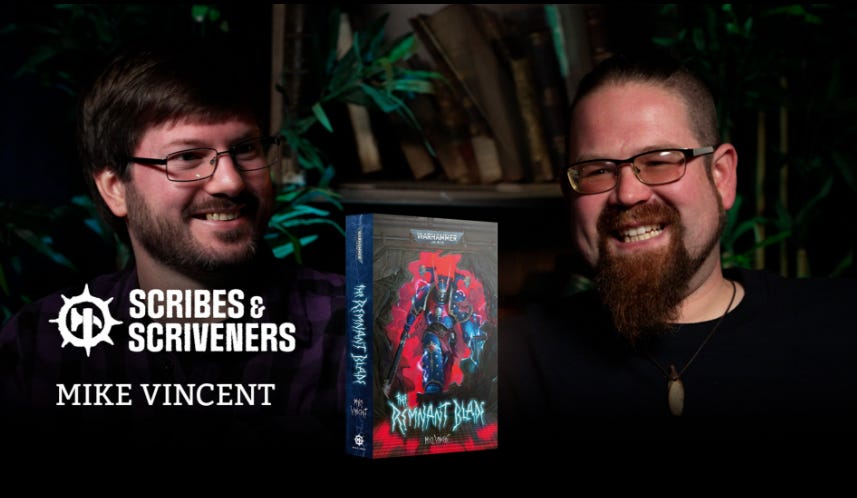
The Writer Files is a companion series to WarhammerTV’s Scribes & Scriveners, sharing highlights from featured interviews as well as looking at the writer and their Black Library history.
Subscribers note: You are receiving this email since you’ve subscribed to the Black Library Features segment of the Warhammer Wordforge. You can easily update your notification preferences here at any time. Thanks for reading!
A New Face
British writer Mike Vincent is one of the Black Library’s roster of younger talent, having only come aboard in 2024. Since that time he’s had a trio of short stories and two novels to his name, most recently Helbrecht: Sin of Hope.
Vincent’s relatively narrow author profile gives us very little insight about the man behind the pen. From his Simon & Schuster bio we learn only that he is married, has a dog, and loves to be in the great outdoors. Goodreads doesn’t reveal much here either, somewhat dubiously crediting him with early 1990’s books British Railway Steam in Colour and Through Countryside and Coalfield: The GWR's Bristol and North Somerset Railway.
That made the most recent episode of Scribes & Scriveners especially welcome, giving us some insight into a writer who’s breathed a bit of recent life into my favorite Legion, the Night Lords.
Here’s a quick walk through his novel portfolio.
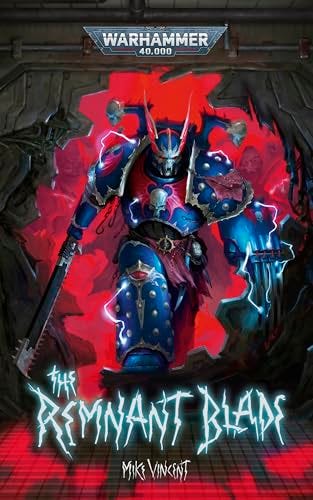
The Remnant Blade
Publication: October 4, 2025
Logline: A disgraced Night Lord must deal with infighting and insurrection among his cadre and a bloody-handed rival to maintain his waning grasp on power. Could a new conquest be what he needs to set things right and regain what he has lost?
As you’ll see from the Scribes & Scriveners interview that follows, my review of The Remnant Blade got at least one thing right. “I have to imagine that there might have been a little bit more pressure than usual for Mike Vincent to deliver a book worthy of the Legion,” I noted at the time. “Indeed, one Black Library author mentioned to me in passing recently that following ADB with the Night Lords was ‘intimidating… a tall order.’ Not hard to see why!”
The Remnant Blade was an audacious debut, and the community of Black Library readers seemed to applaud the attempt. The book was well-reviewed, as was the return of the Night Lords to a front-and-center role for a book.
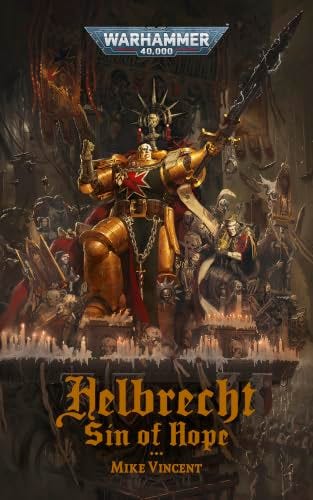
Helbrecht: Sin of Hope
Publication: October 3, 2026
Logline: Helbrecht sees a future of the Imperium renewed and free of the Ruinous Powers. Yet when he must form an unpalatable alliance with the Leagues of Votann, he questions if it is worth the sacrifice to heal what damage has been done to the Imperium.
In a funny bit of coincidence, Marc Collins (the subject of the first Writer Files feature himself penned a Helbrecht novel, Knight of the Throne back in 2022. Having just released this past weekend (almost a year to the date from his novel debut), time will tell how his sophomore effort is received- but I certainly give him a bit of credit for once again stretching to take a challenging assignment with a significant expectation.
“I like writing competence,” Vincent notes in the book’s Special Edition afterword. “Contrasting a capable protagonist with incapable characters is, I feel, something of a trap, and can tend to false conclusions about the worth or necessity of a protagonist’s decisions. We as an audience like seeing stuff get done, even if it is unspeakably horrible stuff, so competent characters, regardless of where on the monster-hero spectrum they fall, draw us like moths to the flame.
“Fundamentally, this was a story about hope. While hope has no place in 40K, people will always be people, and the will to forge a better tomorrow, however that looks to you, does not wither simply because today is bleak.”
Vincent on Scribes & Scriveners
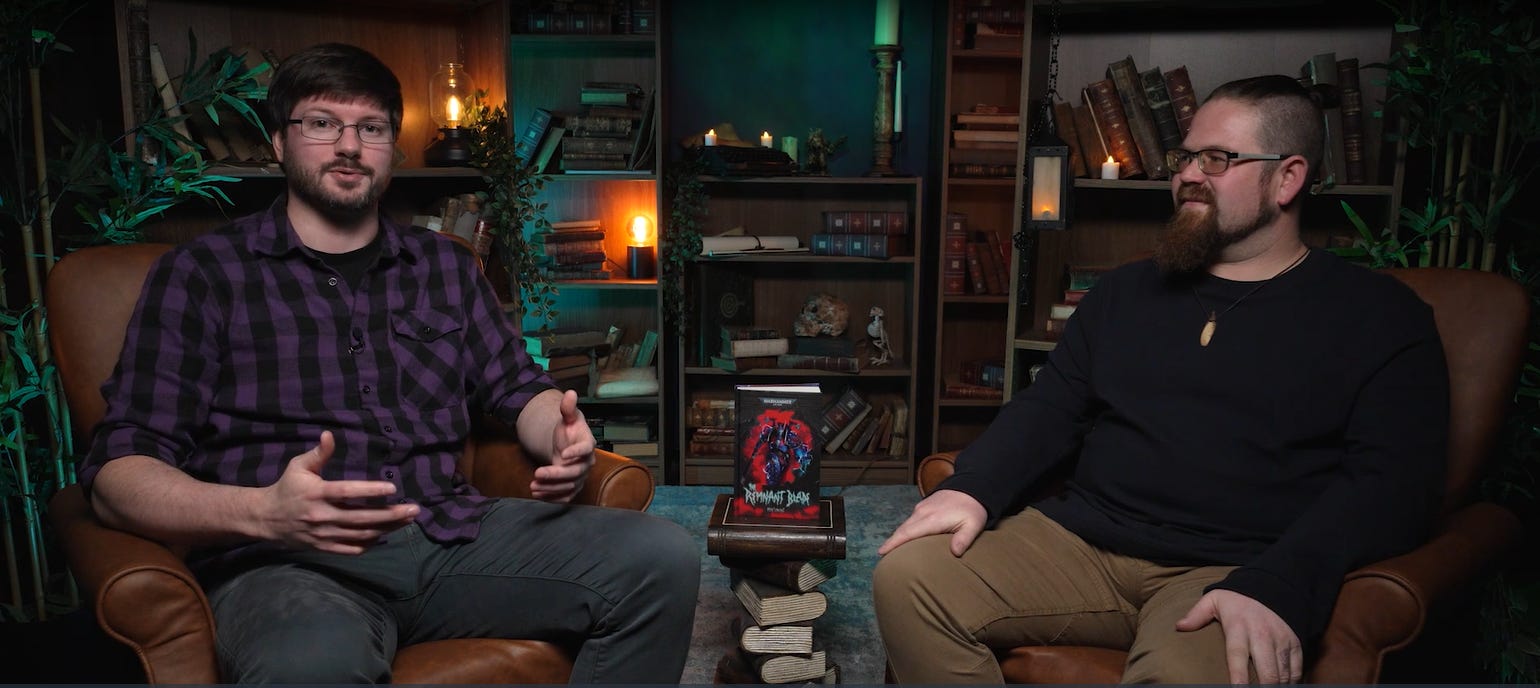
Finally, last month Vincent was hosted by Alex Doddy on the WarhammerTV program Scribes & Scriveners, the occasional author interview series that’s generally timed in advance of an imminent book release. With Helbrecht: Sin of Hope fast approaching (at time of recording), much of their discussion centered around The Remnant Blade and the Night Lords, and I’ve excerpted it here with light editing.
Alex: So most people know you from The Remnant Blade, a wonderful... I say wonderful, it involves an awful lot of violence and backstabbing, exactly what we want from Warhammer 40,000. But before we get to that, what brought you into Warhammer?
For Vincent, his story is a familiar one of youthful curiosity. “Like many people,” he shared, “I was a wee lad. I had lots of small interactions with it. I’d sort of brush by it in this quite short space of time. Nine, ten years old, mates would turn up with White Dwarfs at school.”
“I remember vividly being on a school trip and walking past an old model shop and seeing some in the window, and being like what is that?” When it turned out one of his friends had some Warhammer minis at home, it was all over. “It was the coolest thing I’d ever seen, and I was hooked from there.”
Alex: How’d you go from there, to writing, and more importantly, writing about Warhammer?
Here too Vincent trod a path familiar to many of us. Enchanted with the lore he found in the books and White Dwarf, he began writing stories of his own. “It wasn’t a separate thing, the keenness for the storytelling was part of my hobby. And so I wrote a lot of Warhammer stories, just off my own back for nobody else but me from a very young age.”
Writing for the Black Library was, as he puts it, “a bit of a bit of a pipe dream.”
“So they run their open submissions window, and I started submitting my first open submissions was when I was seventeen years old, just a wee lad. And bar one, I have submitted to every open submissions window ever since.”
“So... persistence, I guess?”
Alex: Dedication.
“Dedication yes, we’ll go dedication. I’d gotten into the habit...it was a really good practice is what I ended up using it for- writing to a brief and to a deadline. And it was just a good exercise, I really enjoyed the exercise and sent it off. And that was always sort of the end things, really.”
And then one day he heard back that after all these years of being interested in the Black Library, the Black Library was now interested in him.
Alex: So from there obviously we’ve got your open submission, the email, the proposal, how does that evolve into writing a book, your first book for Black Library?
Vincent’s path to a debut novel follows a path common to a great many Black Library writers over the years, which involves proving yourself first with short stories. For Vincent, tales like Exterminator and The Vengeful Dead showed them what he was capable of. “After three short stories, they said ahh, okay Mike, do you reckon you could do something more longform? To which I said yes, absolutely, completely, completely confident [voice cracks simulating nerves] that I can do that. And yeah, it was a result from that.”
Alex: So did you propose Night Lords, or was that something that was asked of you?
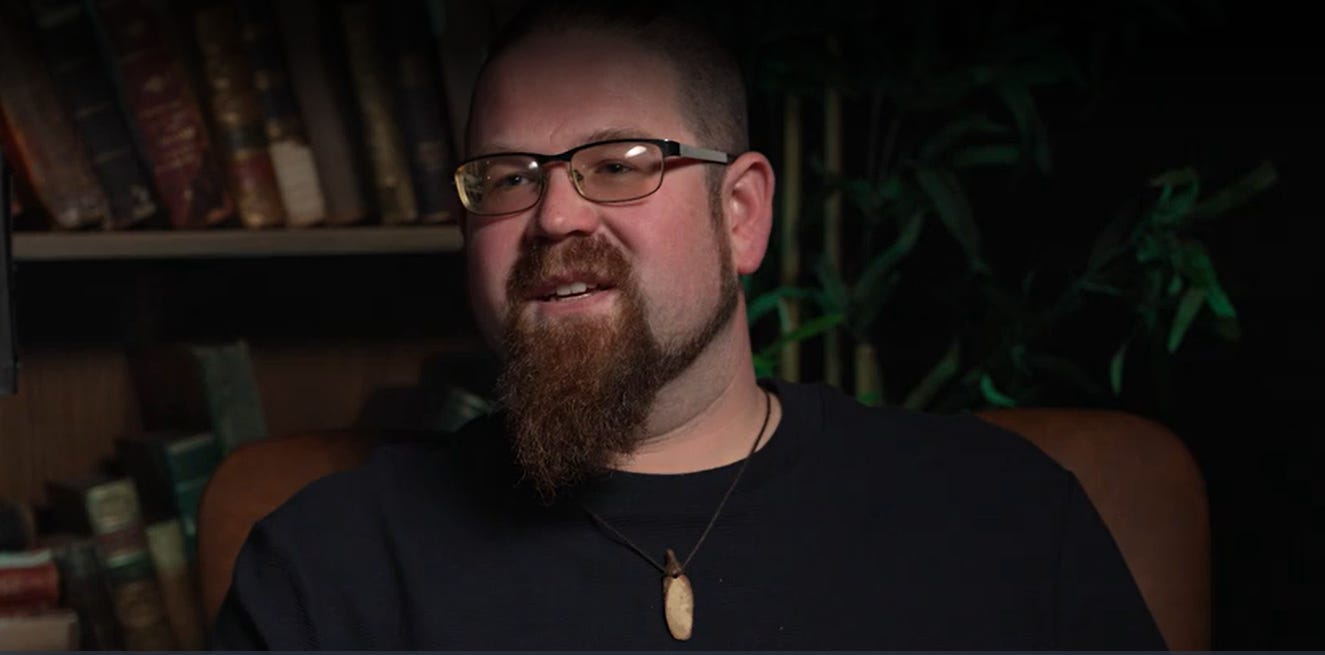
“I chose Night Lords to be my sort of antagonists for my very first short story, the one I submitted,” noted Vincent. “They are one of my favorite factions, in no small part due to Mr. [Aaron] Dembski-Bowden. They’re some villains I can do some cool stuff with.
“And my commissioning editor said, yeah, we quite like how you treated the Night Lords, could you do something else with them? So that let to my second short, Exterminator, which was sort of a Night Lord unleashed from a very, very miserable human perspective.”
From there, he was asked to write a short story based around a “prospective character,” one that could carry a larger narrative. That led to the creation of Dalchian Rassaq, “The Skin Taker” for Blades of Atrocity, released as part of Hereteic Astartes Week in April of 2025 (review).
“They said yeah, we quite fancy [Dalchian] for a longform. Which was terrifying.”
Alex: You mentioned Aaron being one of your influences. How does it feel to sort of tread in the footsteps, cause the Night Lords trilogy is incredibly popular and your approach to the Legion is slightly different than his. It’s a very interesting take. How does it feel to follow that?
'“In a word, terrifying.”
Vincent saw the opportunity as something of a dream come true, and in search of inspiration he raced back to pull his battered old copy of Soul Hunter off his shelf. “I got about three pages in and I had to close it. (laughs) I was just shaking. Aww no, how do I follow this?”
Alex (gesturing): Just feel the bar raising...
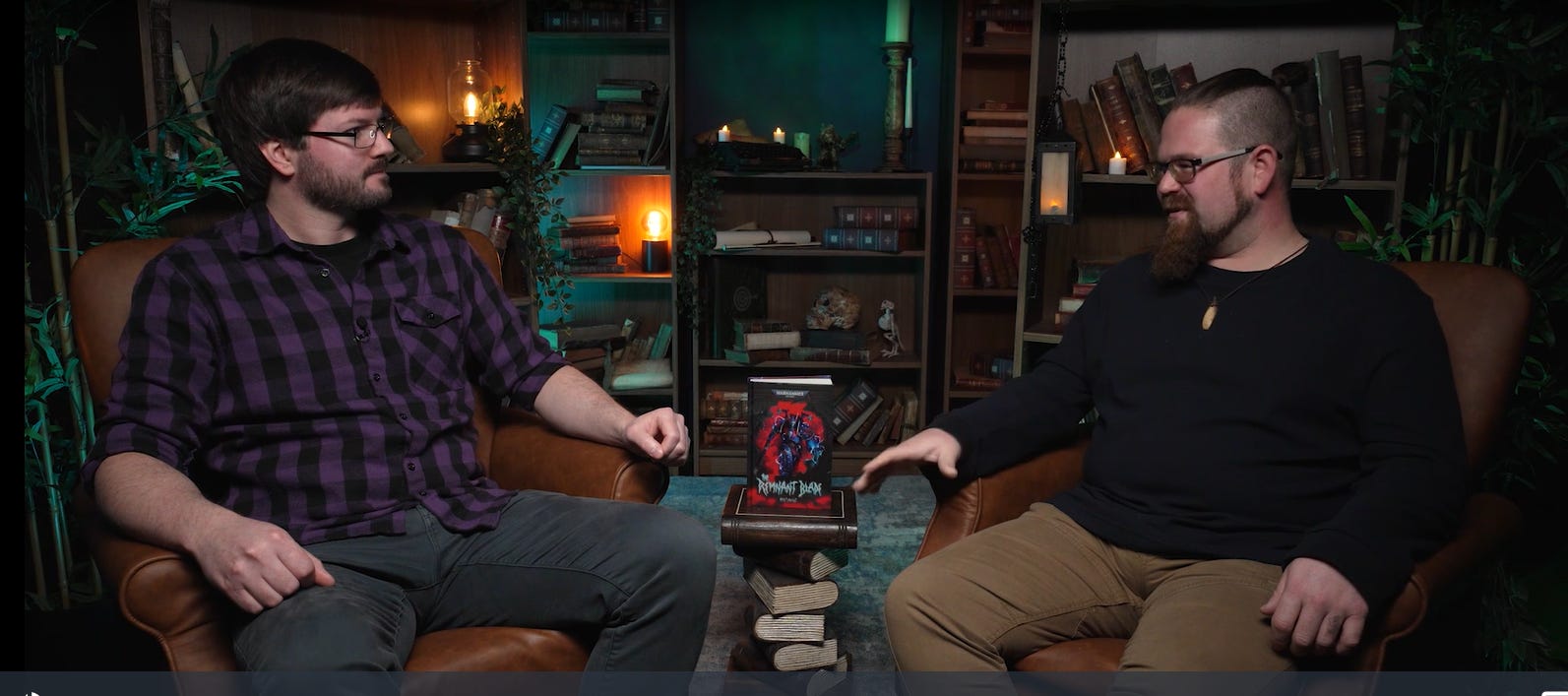
“It was a huge amount of pressure that sort of all fell on me straight away,” shared Vincent. “I was very, very aware. And of course Si Spurrier’s Lord of the Night was pretty seminal when I read that as a wee teenager. I just had to sort of stop and take a few backwards steps, like, I cannot beat Aaron at his own game. Not by a long shot, and I wouldn’t wish to try.”
He continues: “So I sort of had to think about how I would do it differently, and that led to the very, very conscious decision to make Dalchian completely sort of 40K. He’s not a child of the Heresy, not a veteran of the Long War, he only has a tangential relationship with the legion and with Konrad Curze and those sorts of stories, and that helped me delineate his story, his context.
“But it also gave me something to hang off of, his sort of conflict, his internal conflict. Because he starts out in the short story where he appears as very confident of what he is and what he can do, and that’s not necessarily intrinsically a Night Lord characteristic. He was way overconfident and he got absolutely humiliated. And that’s sort of the incitement for the bitterness that the 8th Legion are so sort of renowned for. And it gave me an interesting way, I thought a quite compelling way, to explore that sort of anguish and agonized frustration that the Night Lords are, is so sort of wrapped up in their identity as a Legion, but to bring it from somewhere else.”
Alex: That’s a double down obviously for the warband, the former Blades of Atrocity having been whittled down significantly. And it’s created this significantly more bitter environment for him.
“Like all Chaos Space Marines, he’s not necessarily a nice character. He’s really compelling and he’s super fun to write, but he’s not a nice guy and so I don’t feel much compunction in putting him through the wringer.
“But that’s really essential. I think that’s really a defining characteristic of the Night Lords is that since the Heresy they haven’t been given what they need to function as a Legion. It’s always been, whatever help they have been given has usually been taken away. Obviously, spectacularly by their own Primarch in their history. They’re always scrabbling around, they’re always the underdog, which I find very, very compelling.”
Alex: There’s never a focal point, a unifying force for them.
“One of the most interesting aspects to write about when it comes to the Night Lords is, is their lack of spiritual or philosophical drive. So they don’t have a big thing that they want to do as a cohesive unit. Which is quite rare in the Warhammer 40K universe, whether its the Imperium or whether is Abaddon the Despoiler or any of the Xeno factions. They have a thing that they’re trying to do, usually, a big and impossible thing for which they will dash themselves against impossible odds, ad infinitum. The Night Lords don’t have that.
“If anything, their struggle is to figure out what they themselves are for. But they are also Astartes, so they have inbuilt into them...”
Alex: This drive...
“They have to do something, they don’t know what it is, but they have to win.”
Alex: They have purpose but no direction.
“Yeah, absolutely. And so its this really interesting sort of dichotomy that you get, that I get to explore is that. The Night Lords just want something, but they don’t necessarily know what it is.”
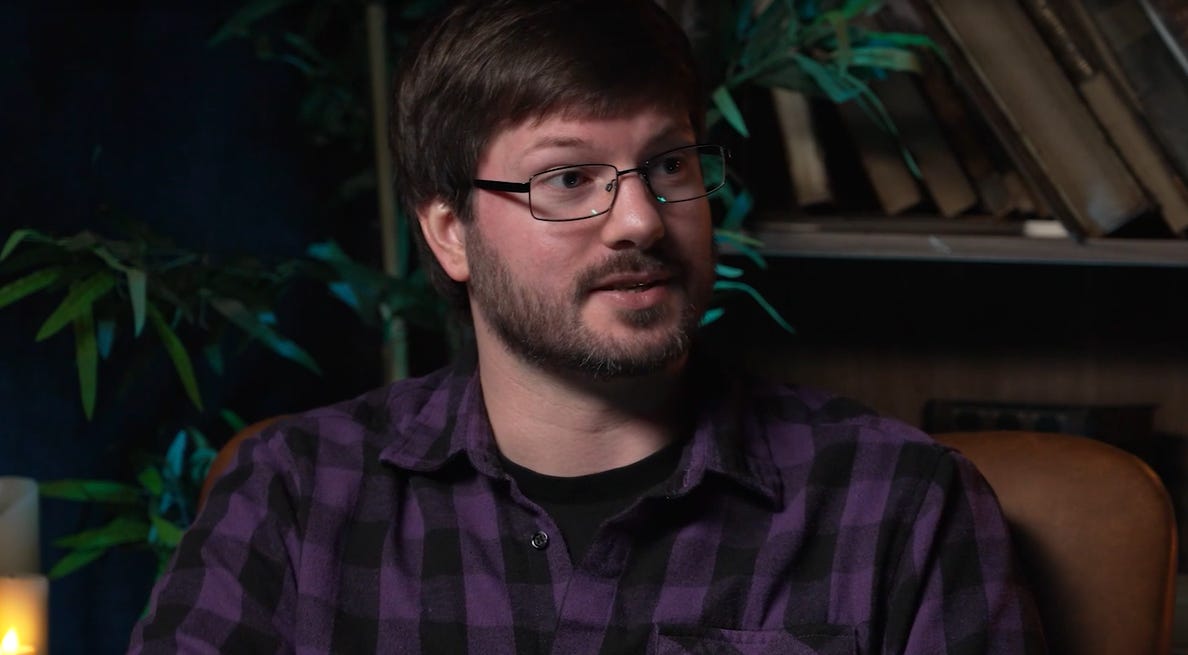
Alex: There’s a poignant little moment where Ibriel finds the Penitent Engine is using a pain device that has Nostraman origins, and Dalchian hears that and thinks, hhm, that’s interesting. But no further. It’s like if a Space Wolf appeared, this is ancient Fenrisian technology they’d be all over it. He just, there was that connection, that acceptance, ahh yeah that’s vaguely in our region, but at the same time there was no drive. There was no desire to go, oh are we gonna incorporate that into something. There’s no reverence.
For Vincent, this was a conscious decision. “They don’t really respect anything, least of all themselves. That’s part of that. It’s just a curio to him. But its still, it’s meaningful in his context. Its meaningful to the audience. And I think it is meaningful to Dalchian, but he doesn’t know what to do with it, doesn’t know why. And so he just sort of files it for later, because he’s- again, sort of going back to that because of that distance that he has from the sort of foundational mythos of his own Legion even, he sort of keeps it at arm’s length.”
Alex: There’s a sense of irony in the Night Lords lack of that purpose. But it makes them more dangerous, particularly when we discuss the politicking of warbands. They never know exactly what the Night Lords are after, so it actually works to their advantage in that situation. Because when we talk about the Imperium, the massive bureaucracy is always the thing holding it back, and the momentum drives it on. The Legions probably actually have it worse when it comes to the bickering and the politicking and the backstabbing, Dalchian’s great at that, but at the same time he only has a handful of Remnant Blades.
“Yeah, so that was something I’ve always been really compelled by about Chaos Space Marines, is the level to which they were fractured and never have re-coalesced really. I wouldn’t say necessarily it’s worse than the Imperium, but it’s definitely a different shape, it’s a different flavor.”
Alex: More stabby.
“Yeah, it’s a bit more stabby. And it’s a bit less... The Imperium, obviously it’s death by bureaucracy, so it’s wrapped up in process and in institution and it’s sort of just as cruel and miserable but it has that sort of veneer of officialdom. Whereas the Chaos Space Marines are a lot more, because of their innate capacity and because of the level to which they can operate independently of a lot of other heretical institutions, they’re a lot more anti-heroic, I guess.”
Vincent picked back up the thread of Night Lords identity here. “That is a strong point of the Night Lords, that they can be on someone’s side as long as it suits them, and I think that probably goes to the heart of one of the real conflicts of this story in particular. Because of that lack of a sort of spiritual or philosophical driver, the Night Lords can be ruthlessly pragmatic in a way that lots of other characters can’t, they’re [not] bound by their own lofty goals and intentions.”
Alex: So the Night Lords being this incredibly backstabbing, conniving... cunning? group, how did you go about writing them in a way that is compelling without sort of making people assume that around the next corner they’re gonna stab somebody else.
“Good question,” he replied. “Again, they’re not having a sort of philosophical drive, that needs to be counterbalanced by your characters and your main character having a very powerful personal drive. Something very much that he wants to achieve, which he does. And its, to me, its again a strength of the Night Lords is that their choices whether to engage or not or how to go about pursuing their particular objective are driven by the objective that its the ends, not the means.
“So that allows you to, in a way it makes them more compelling because they can come at certain problems in quite a human way. They can choose- especially when there’s only a handful of them- they can choose to be circumspect or to try to concoct victory that is not just sort of direct confrontation. And when they choose to avoid the big scary thing, I think that’s something we sort of recognize in ourselves hopefully. I think it doesn’t make much sense to just throw yourself meaninglessly against certain death. Whereas that’s kind of a lot of Space Marines, especially Loyalist Space Marines, is that that’s kind of their schtick. They will fight to the last drop of blood, every single time.”
Alex: It’s that whole, ‘know no fear’ aspect of them. I can’t back down from this confrontation. But to the Night Lords, [it’s] why am I engaging in this?
“It’s literally that,” concurred Vincent. “It’s that pragmatism again, it’s choosing their battles, choosing what they actually want out of a situation because it’s not just victory for victory’s sake. It has to be of practical value, it has to be of worth to engage it. But I do think that lulls your audience into a false sense of security, or I try to lull them into a false sense of security because they sort of are conniving, ducking and diving for a bit and they get sort of funneled into a dead end.”
And then you remember they’re Space Marines, then they absolutely tear things to pieces.
“That contrast was something that I really enjoyed playing with. To make them, ohh yeah of course they’re gonna run away… of course they’re gonna sneak around… of course they’re gonna sneak out of this. Oh no- they’re actually gonna tear it up. And there’s going to be not a lot left once they’re finished, because they’re still Space Marines, because they still have that capacity and that physicality.
“I found it really compelling to write, it was a wonderful sort of duality and it’s something you can reflect in the characters as well. So there are some characters who are very sneaky and very conniving, and will almost avoid a confrontation at all costs. And there are some characters who will let the objective fall by the wayside and simply seek out confrontation, so I used that, I mirrored that within the warband itself as sort of a mechanic for narrative drive and tension.”
Alex: You mentioned the end- now, spoiler for anybody who’s not read the book- they end up with a Black Ship. That’s terrifying. There’s a huge potential there, obviously, the Night Lords in charge of an incredibly stealthy ship. Any hint as to what the purpose of this is, or is this again, that was the ends then, but now there is something else and this is the method by which we’re getting there.
“Well I guess this is a key question for Dalchian,” replied Vincent, “as the character that he is at the end of the story, having gone through what he’s gone through, and now having this tremendously powerful prize. Because the question of his journey is always about what he needs to do versus what he wants to do versus what his fellow warriors want him to do. And it sort of almost leaves the echo ringing once you finish the book, the question of what he is going to do with it.”
“But yeah, there’s certainly a lot that he could do. (laughs) There is huge potential and I think it will be really interesting to explore that potential, yeah.”
Alex: Speaking of that, is there an aspect of Warhammer 40,000, Age of Sigmar, anything within the Warhammer universe that you would like to explore.
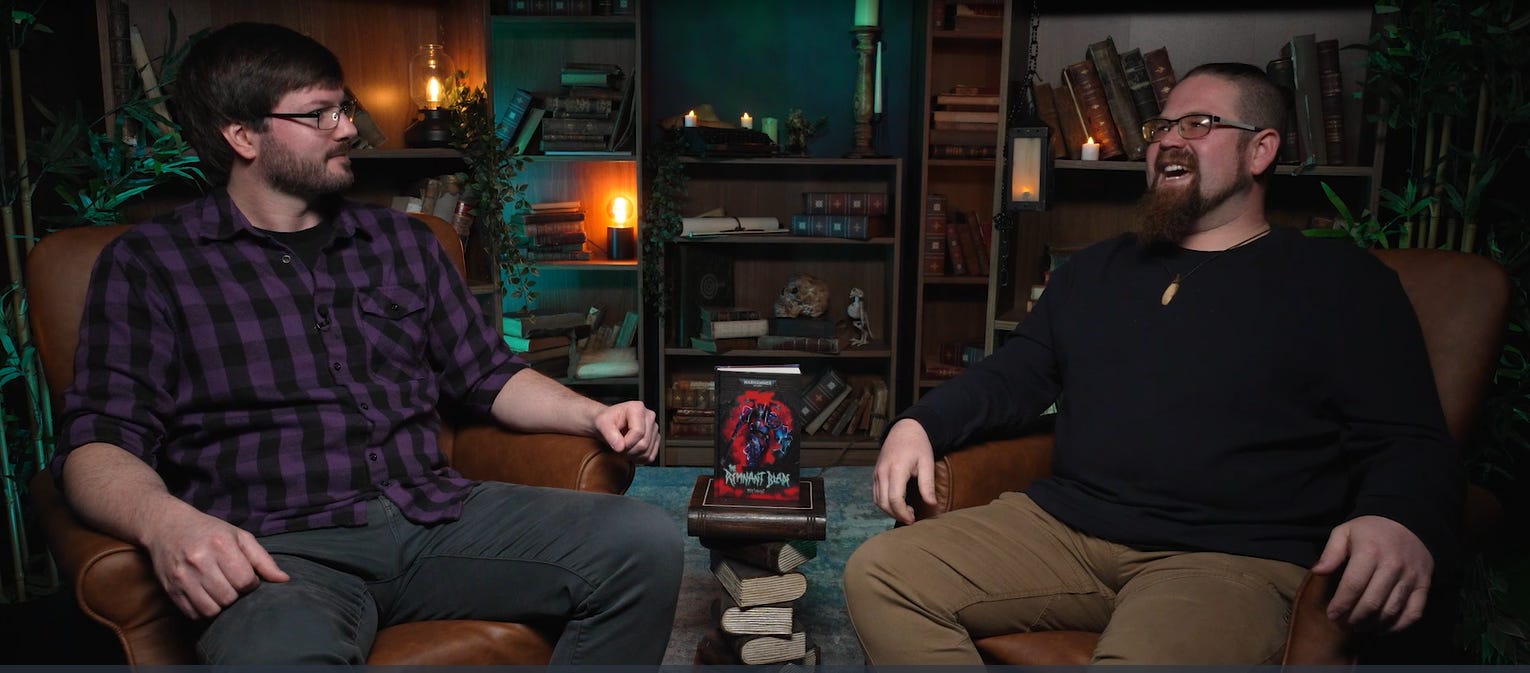
“Well the glib answer is ‘all of it,’ obviously.”
But Vincent narrowed down what he finds most compelling to write about in the Warhammer universe. “I love the frontiers, the wild edges. I love the bits where what we know about the universe is very thin, very fuzzy, and whether that’s in the depths of some forsaken hive somewhere or whether it’s on the fringes of the core stars or wherever. Anywhere where the lines are blurred and you haven’t got these huge edifices. Like, I love stories about Terra and I love stories about Ultramar, I love stories about those big sort of...”
Alex: Well-known and well-trod...
“…but they are the center of things. And that has its own power and majesty- of course it does- but I love the scrappy bits at the edges, the burnt ends.
Alex: So your journey to writing this book, we’ve got the Black Library submissions process for many years, finally the short stories... Do you have any advice for writers that were in your position?
“Keep writing. It’s such an obvious thing to say, but it’s so easy- especially if you’re not sure where its going, either narratively or in your own life, if you haven’t got an agent, if you haven’t got a publisher, if you’re just writing it can be really easy to convince yourself that there’s no point doing it.
“Decide who you’re writing for as well, because there are thousands- millions- of people who write stories for themselves. And that is a beautiful thing, and I love that. I did it for many years, I was the only person who read the stuff I wrote. And its great, its a great way to spend your time and to use your brain.
“If you want to write commercially, then the craft. That’s something I come across with a handful of beginning writers, they’re full of awesome ideas and really cool concepts, but there is a tendency to sort of ignore the basics. And they are the basics for a reason, so plot and character and arcs and motivations and things like that. It can be dry, but it doesn’t have to be. But an awareness of it, even if youy are then going to subvert it. I think its certainly allowed me to suddenly see a story and a character as like a whole thing rather than just, I’m typing along and I have no idea where it’s going.
“So learn your craft, keep writing, and keep submitting as well. There’s so many different places depending on what you write, especially now that we have the magic internet. There’s so many places to go with writing. Find those places. Ask people. Get emails of authors you admire and get in contact with them. Be necky, because with any creative endeavor no one is going to come along and drag you along with them. You do have to put yourself out there and push yourself and persist for over half of your life, until (laughs) someone picks you up.
Alex: It’s been absolutely brilliant to talk to you. Thank you so much for being here.
Thanks for reading today’s profile of Mike Vincent. There are plenty of Scribes & Scriveners both ahead and behind, so look for the next installment in the near future!
Really loving these Scribes & Scriveners companions. Thanks for doing them. I want to read this book now!