
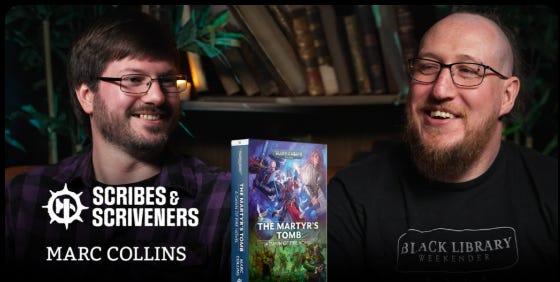
Welcome to the newest occasional series here on the Warhammer Wordforge, The Writer Files. This will be a companion piece to WarhammerTV’s Scribes & Scriveners show, sharing highlights from that interview as well as looking at the writer and their Black Library history.
We’re kicking things off with Glasgow-based NHS Biomedical Scientist Marc Collins, whose latest Warhammer offering Blackheart: Claws of the Maelstrom will be going up for preorder this week1.
The “Black Library’s Latest Prodigy”
Collins’s history of writing Warhammer is well-documented, and back in 2021 Warhammer Community ran a short interview with him in advance of his debut novel, Grim Repast. Collins had come up through the open submissions call, a process they called “as exacting as Astartes selection.” It was a terrific break for Collins, who had been trying his hand at it “for years2” before meeting success. That led to his debut short story, Ghosts of Iron, the following year.
Here’s his reflection on this time from a guest article he penned for Track of Words.
The Open Submissions process, all ten or so years of trying at it, definitely taught me patience. It’s important as you work at this never to give up. Every failure or rejection will teach you something. You pick yourself back up, dust yourself off, and try again. It’s hard, some years, and you feel like you’ll never make it – but it can happen. It does work.
Once you’re in the door one of the most important lessons is compromise. You’re trying to sell someone wholesale on your vision, absolutely, but you’re also working to a brief. It’s a collaboration. Sometimes the ideas you’re most invested in might not pass muster. Sometimes it isn’t the pitch you’d hoped for that makes it through. What matters is that you commit to that idea with the same energy and verve as your favourites.
When Warhammer Community put out the article hailing me as a ‘Prodigy’ for coming up through the Open Submissions, it was definitely a highlight of my career. It’s not a title I would use, and I am very aware that so many great talents and voices have come up through the Open Subs with their own incredible works. It’s humbling, and something that I use to keep myself committed to the process as I continue to grow and develop.
Since that humble start, Collins has had an impressive six novels published for the Black Library, and on a rather wide variety of subjects. Whereas some writers enjoy going deep on a particular segment of the lore- think Steve Lyons here, for example, with the Death Korps of Krieg, no two of Collins’s works have bore much resemblance to one another.
Here’s a quick walk through his novel portfolio.
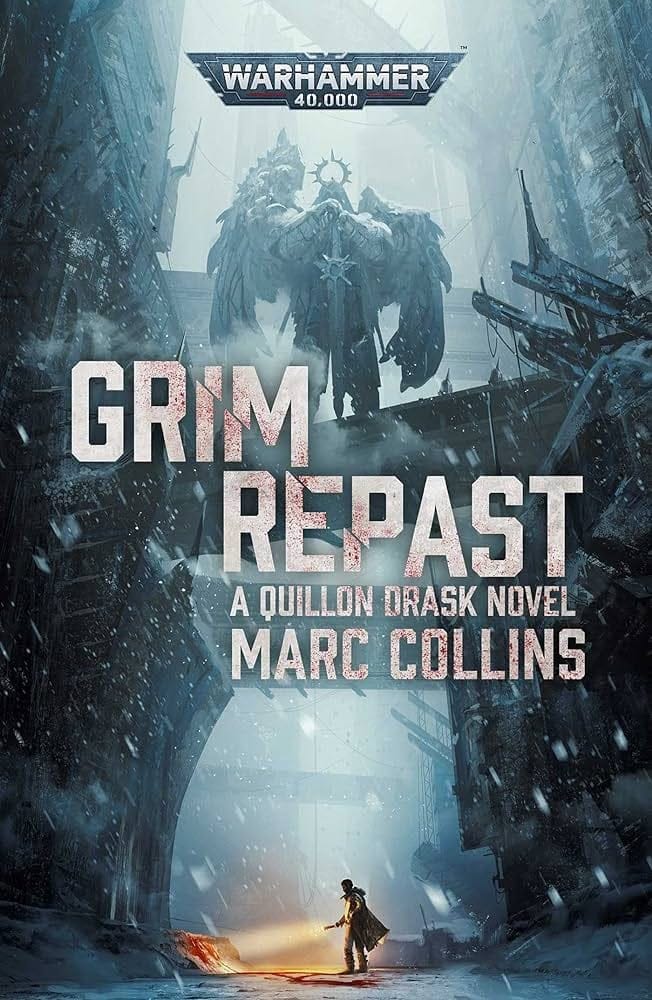
Grim Repast
Publication: September 25, 2021
Logline: Tormented by his past, Probator Quillon Drask’s reputation as the go-to detective for strange crimes has led him to the Polaris district of Varangantua. Warring families, corrupt officials, and a monstrous hunger stalk these streets, and Drask must overcome his own inner agonies to bring justice to the tormented city.
Collins’s novel debut came with 2021’s Grim Repast, a story set in the world of Warhammer Crime. “After Warhammer Horror I think that the crime imprint was inevitable in a lot of ways,” he shared in a 2020 interview on Track of Words. “People kept asking for ‘domestic 40k’ and this delivers in spades. Building on the much earlier foundations of stories like Eisenhorn, but also on stories like Chris Wraight’s Vaults of Terra novels.”
With a terrific blend of bleak noir and body horror, Grim Repast is frequently mentioned amongst the better offerings in the Warhammer Crime range, both a statement of purpose from Collins as well as a taste of what kind of storytelling he’s capable of if given the opportunity.
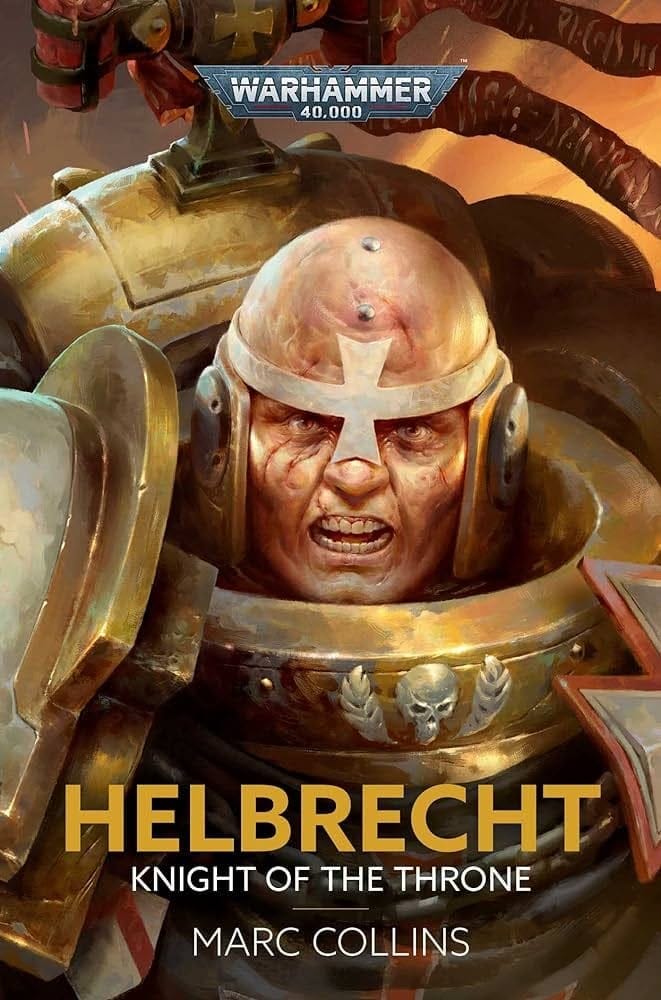
Helbrecht: Knight of the Throne
Publication: July 9, 2022
Logline: Guided by a vision, the High Marshal of the Black Templars journeys to a world left in ruins for millennia, in search of a holy relic.
The first of Collins’s forays into the “Character” series, this short novel sees its titular character crossing the Rubicon Primaris and adjusting to Imperial life under Roboute Guilliman. The contrast between Helbrecht’s faith and Guilliman’s more secular approach sends him on a religious pilgrimage.
In an interview that year with At Boundary’s Edge, Collins noted that the predominant theme of his work to date had been “faith and duty.”
“Whether that’s the Ad Mech, Genestealer Cults, Black Templars or Sisters of Battle,” he went on, “or whether it’s the personal sense of responsibility of men like Drask. With my own little corner of Varangantua and the setting of Helbrecht I also try to drive home just how terrible a place the Imperium can be. Whether in casual or monumental cruelty, both are themes I hope to carry forward and develop in my work.”
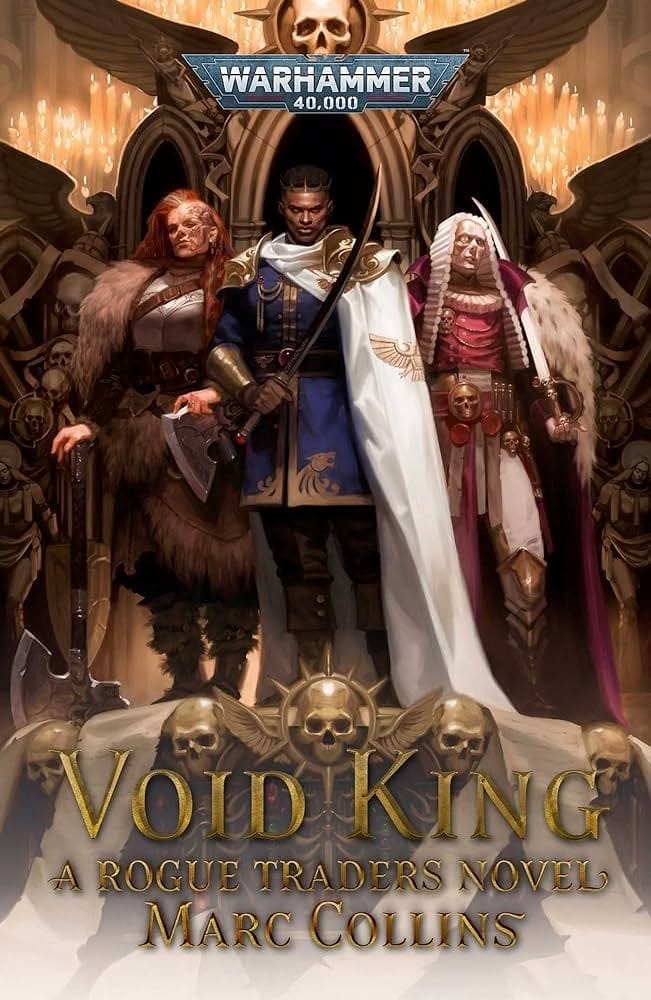
Void King
Publication: October 22, 2022
Logline: As the Indomitus Crusade begins, Roboute Guilliman tasks the Davamir Compact to find a route across the Great Rift.
For a tabletop wargame that started life as Warhammer 40,000: Rogue Trader, the bearers of the Warrant of Trade have seen relatively modest representation in the pages of the Black Library. Here Collins took them on full-tilt, introducing us to no less than three such dynasties. He’d introduced the Fenrisian Helvintr dynasty in an earlier short story, 2020’s The Shaper of Scars, and mined that vein again for the full-length tale.
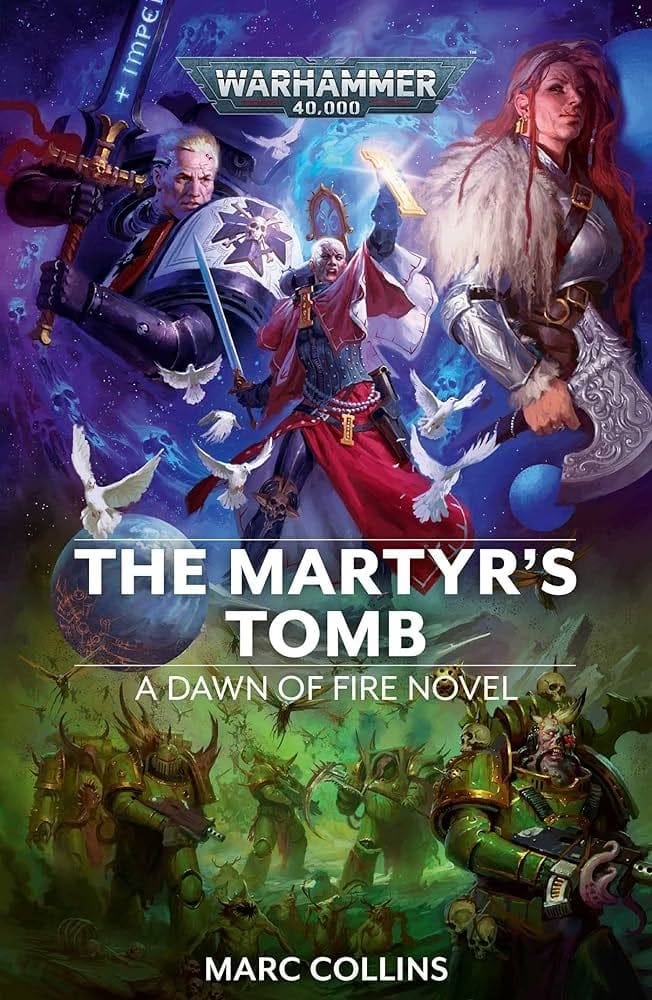
The Martyr’s Tomb
Publication: June 1, 2023
Logline: The zealous Black Templars and the Order of Our Martyred Lady hold a shrine world against the Death Guard – a guttering light in the darkness.
This was a new step for Collins, and a sure sign of his increasing stature within the Black Library. The Dawn of Fire was a major series launched in the game’s 9th Edition, designed to tie together all the varying strands of lore and move the narrative arc of the grim, dark future forward. Collins would be the most junior member of a writing team comprised of veterans Guy Haley, Andy Clark, Gav Thorpe, Nick Kyme, and Chris Wraight.
The Martyr’s Tomb was the sixth book in the nine-book series, featuring the Black Templars and Sisters of Our Martyred Lady defending a shrine world from the predacious attentions of the Death Guard. For a man that once remarked, “I have a terrible weakness for zealots3,” this was clearly a passion project.
Reception to this one was notably mixed, though how much of that is down to a particular book versus general series fatigue is hard to say. I give a lot of credit to the Black Library editing teams, but ‘long-running series planning’ hasn’t necessarily been one of their stronger suits over the years.
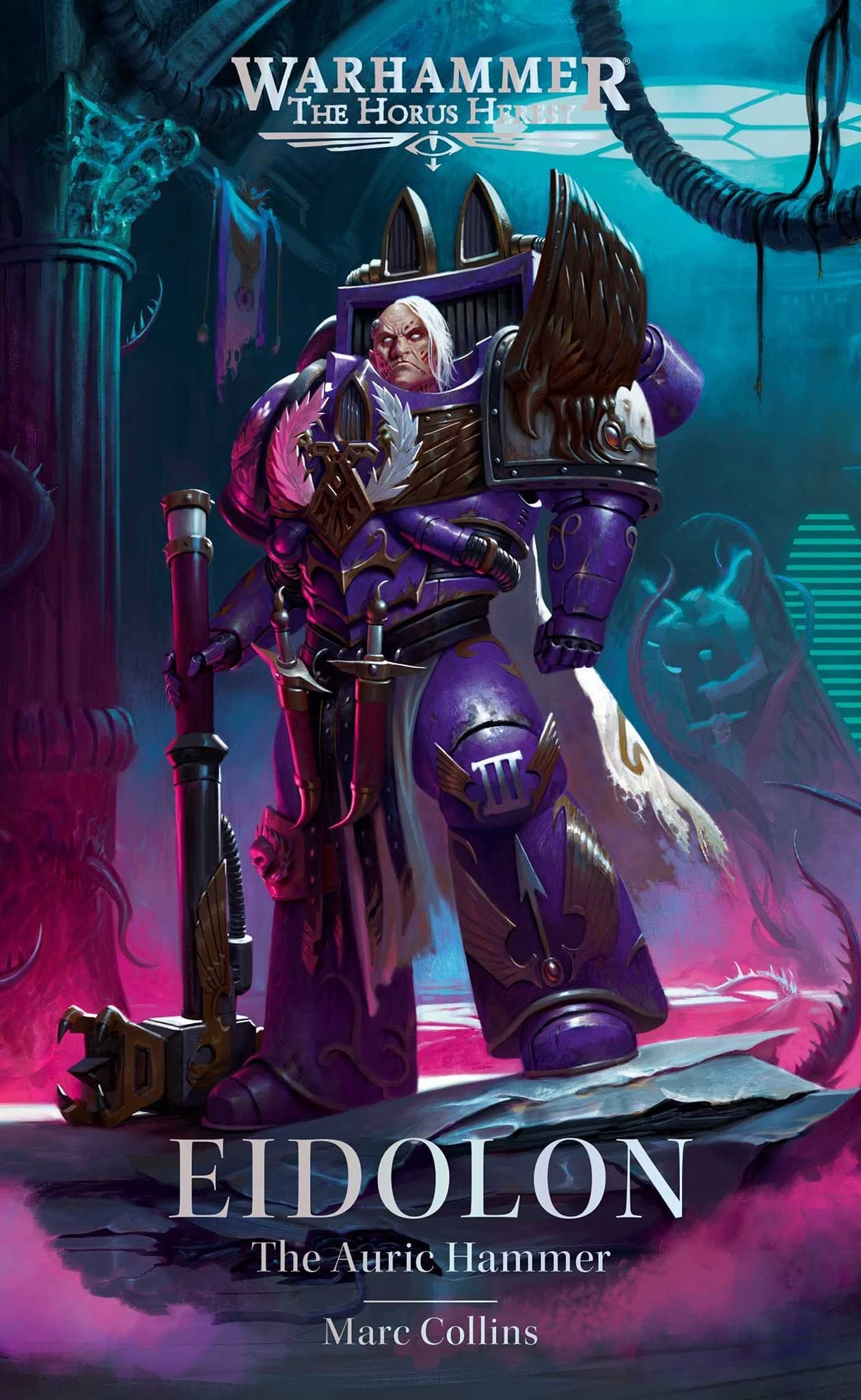
Eidolon: The Auric Hammer
Publication: October 22, 2024
Logline: Lord Commander Primus Eidolon has claimed many titles along the annals of his infamy. He is the Exemplar and the Risen, the Soul-Severed, and the Auric Hammer. Now, fallen far from his primarch’s grace, he carves a path to Terra, where the culmination of Horus’ grand heresy awaits.
In many ways, this is probably Collins’s most acclaimed work, the star of his portfolio-to-date. Another Character series entry, the book’s shorter length allowed him to tightly focus in on Eidolon and his Emperor’s Children cohort. Authors able to take some of the universe’s more two-dimensional characters and expand their range of depth tend to draw the acclaim of the community (hello, Aaron Dembski-Bowden!), and his Eidolon here emerged a more nuanced character for the effort.
“It’s his arrogance, the sheer unbridled hubris, that makes him so compelling to write,” shared Collins in a 2024 interview for Warhammer Community. “Eidolon is a character that so many start out hating, but by The Path of Heaven by Chris Wraight I found him quite deviously likeable. The work that writers like Chris do with him paint Eidolon very much as a ‘villain’s villain,’ but finding the core of humanity in that – the flaws and vulnerabilities that make him that way – and toying with them made it a truly enjoyable process.”
Eidolon is my talisman tale for the axiom, “not every book is for every person4.” I went into the book with high hopes, but it failed to really land with me. I was delighted to note that it went on to claim runner-up for the official 2024 Black Library Book of the Year, losing out only to Siege of Vraks by Steve Lyons.
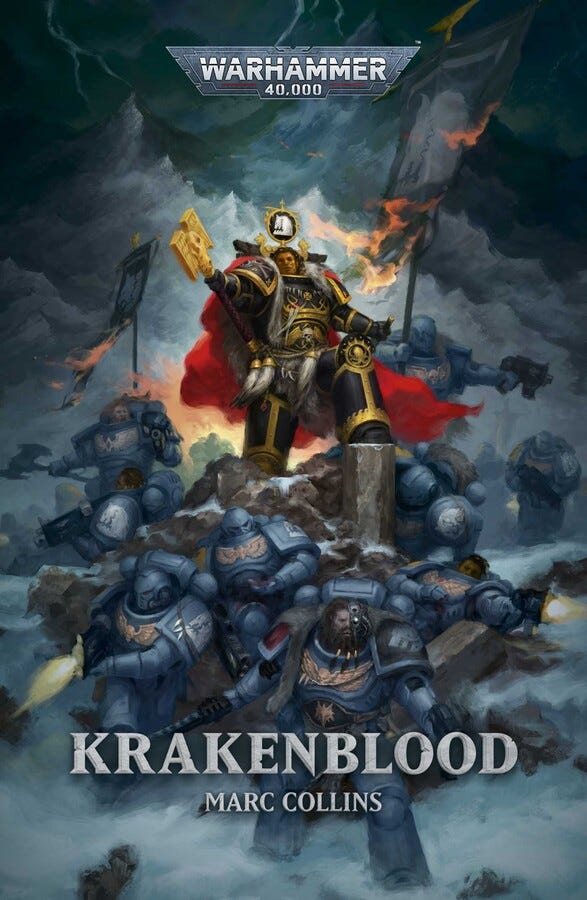
Krakenblood
Publication: October 31, 2025
Logline: A Wolf Priest is tasked by Ulrik the Slayer to recover an ancient relic of the Chapter – a chance for him to write his own legendary saga.
While breaking new ground in his portfolio with the Space Wolves, Krakenblood wasn’t entirely divorced from his past works either. In the story, Ivar Krakenblood’s expedition is expedited by a Rogue Trader of the same Fenrisian dynasty we’d met in Void King. This story was a sort of anti-Eidolon, a book that was somewhat mixed in its reception that I thought very highly of.
"More than anything else," he wrote in the Special Edition introduction, "I wanted to ground this novel in the heart and the soul of the World of Winter and War... This is a novel written as a love letter to all those who have gone before, carrying the torch for the Space Wolves. I have only got here by reading and enjoying what has been written by countless other authors."
Getting Inside his Head
Thanks to his engagement with the reading community, we get a pretty good sense of the things he considers part of his essence as a writer. The importance of faith and duty in a universe that outwardly appears to care very little for either- and what happens when those things are taken beyond the realm of reason and into the irrational or fanatic.
From the outside looking at his body of work, you see other themes emerge as well. The burden of legacy, for instance, and what it means to labor under a destiny that you did not choose, but rather inherited. What it means to operate on the fringes of a dogmatic Imperium, carving out a path that uneasily straddles the line of society’s norms. And finally, the concept of atmosphere as character, a reflection or foil to the inner essence of one’s heroes (or villains) as seen in the works, say, of Jack London or Cormac McCarthy.
This is renegade poet territory, and perhaps it is little coincidence that I found Krakenblood to be some of the Black Library’s most poetic work yet.
It’s been said that if you want to see what makes a writer tick, look no further than the well-worn copies on their bookshelf. Collins was kind enough as well to share with me six of his book recommendations for Black Library Weekly (back when I wrote the column for Goonhammer, later Tabletop Battles) last October, and I’ve excerpted that here:
Sharing a Six-Pack with… Marc Collins
Three Black Library Books He’d Recommend…
Fire Caste, by Peter Fehervari. “Probably one of my favourite ever 40k novels. Drenched in madness and despair, it was ironically a breath of fresh air. Fehervari is one of those people who just gets what the setting is capable of, and his worldbuilding is second to none. Phaedra practically leaps off the page and the fact that he has been able to return to it, time and again, to carve out another horrid little corner is a testament to how deep the Coil goes.”
The Carrion Throne, by Chris Wraight. “Speaking of exceptional worldbuilding, Chris Wraight brings Terra to life in a way that really speaks to me. He delves into the banality of living in such an immense and oppressive world, describing it in the Introduction as a Gormenghast of the stars. Crowl and his retinue are human and compelling, despite the things they have to do. Even bit players steal the show as they unravel a mystery based around one of my favourite lore tidbits from the codexes.”
Honourbound, by Rachel Harrison. “One of my absolute favourite of Guard novels, amidst an ever more crowded bracket of talent. Maybe it was down to the run of short stories that preceded the novel, the care taken to flesh out the regimental culture and the characters who embody it. I really do miss the Antari Rifles and hope that we get to see more of them one day; till then it will always have a special place in my heart.”
Two Non-Black Library Books He’d Recommend…
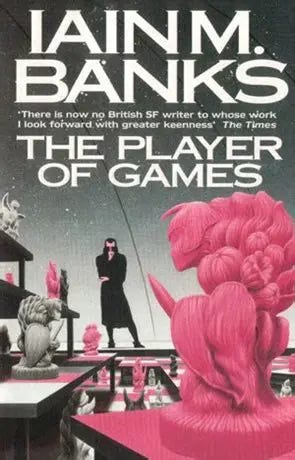
The Player of Games, by Iain M. Banks. “One of my absolute favourite novels of all time, from who I would say is my overall favourite author (my first tattoo was a quote from Use of Weapons). There are other books in The Culture series that I enjoy, but Player of Games is special to me. A game that is so important that it defines your place in the world. A clash of civilisational values that will decide the fate of an empire. Manipulations within manipulations, and Gurgeh’s move from naivety and boredom to a passion for addressing the cruelty he sees. I would recommend it as a starting point for anyone who wants to get into the Culture, more than I would Consider Phlebas.”
Pattern Recognition, by William Gibson. “As much as I love the Sprawl Trilogy and Neuromancer especially, I think I’ve returned to Pattern Recognition more times than I have Neuromancer. I think this one sticks with me because it uses the tropes of cyberpunk in a modern setting and shows that we’re not as removed from the techno-dystopia as we might like. Cayce Pollard is an oddball protagonist of the best kind, by turns unknowable and relatable. Also a very candid look at what internet culture and hyper-fixation can do to you.”
And Finally, One of His Own Books He’d Recommend…
Always a tough one. I find that my attitude to my books fluctuates wildly in the writing, the editing, and then post-release. I think though that Grim Repast, as my first released, is the best introduction to my work and one that I’m particularly proud of. Warhammer Crime was an incredible opportunity and I’m so glad that I got to contribute pieces of setting and ideas to the glorious tapestry that is Varangantua. To prepare I re-read the crime novels that had always spoke to me; the works of Thomas Harris and Ian Rankin especially. I like to think there’s a bit of Edinburgh claustrophobia and murk in the DNA of the Polaris district.”
Collins on Scribes & Scriveners
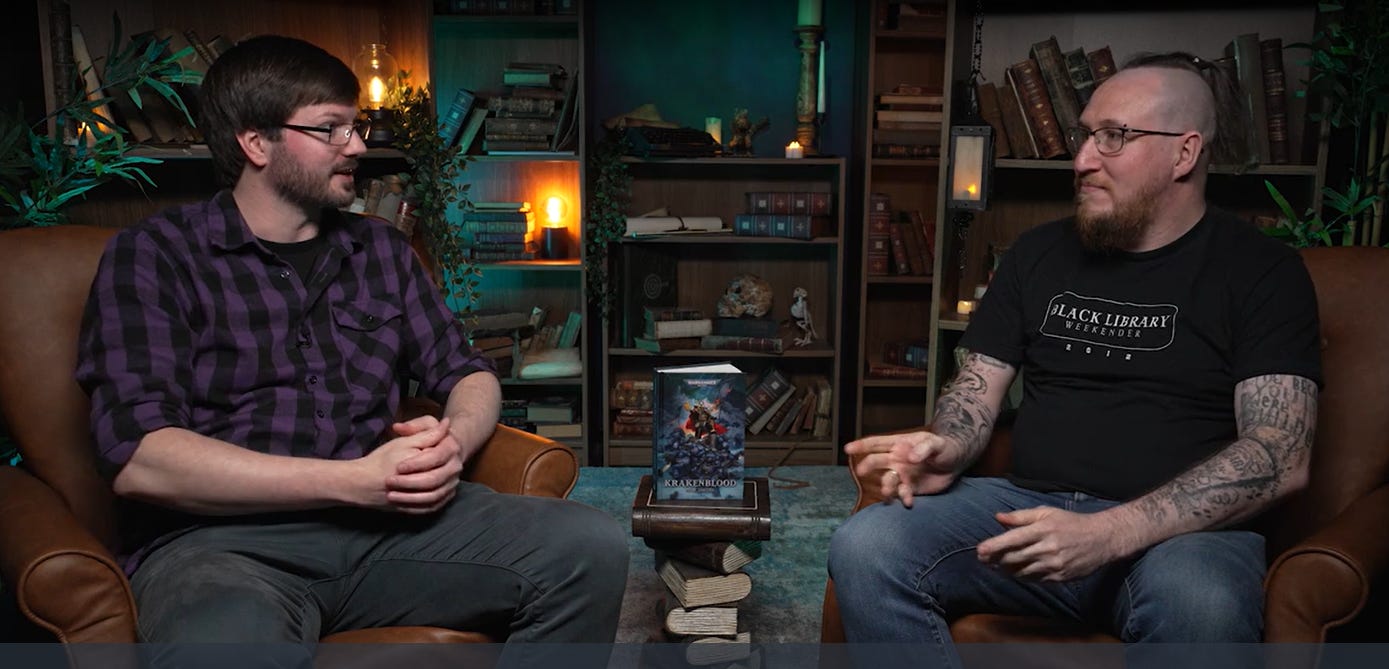
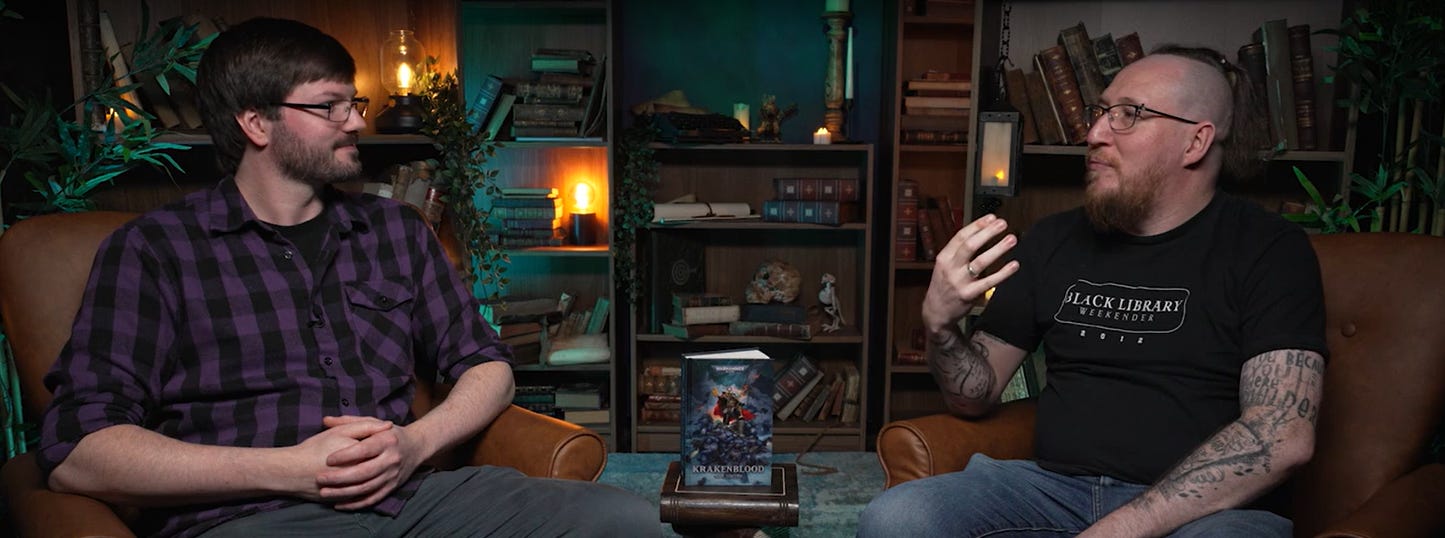
Finally, last month Collins was hosted by Alex Doddy on the WarhammerTV program Scribes & Scriveners, the occasional author interview series that’s generally timed in advance of an imminent book release. With Blackheart: Claws of the Maelstrom around the corner, here’s a brief summary of their conversation.
Alex: What got you into Warhammer?
In high school, one of his friends gave him some Codexes in an effort to get him into the game. Collins was intimidated by the miniatures and paint jobs in them, but immediately attracted to the lore and the stories.
Of course, it didn’t take long for him to begin “slowly working my way towards building my own pile of shame.”
Alex: And then from those early hobby years, how did you get into writing?
Collins notes it' sounds cliche, but he always felt like he wanted to write. The more he got into the Black Library, the more he felt drawn towards wanting to do it himself. He started writing down his ideas, and soon developing them into his own “homebrew” fiction.
Alex: And then the Black Library?
His first Black Library book was the Eisenhorn Omnibus, by Dan Abnett. He ws immediately drawn in by “the scale, the grandeur, this terminal gothic collapse… and there’s still people scrabbling through it trying to do their best fighting for what they believe in. Seeing the cosmic tumult at the heart of it, and where the line is between heroism and villainy, sanity and madness always appealed to me.”
He was heavily getting into reading the Black Library at the time the Horus Heresy series was beginning. “Seeing the stories from the Codexes come to life was amazing.”
Alex: It’s the ultimate journey. We know where it starts. We know where it ends. But we never truly explored everything that lies in between. It’s such a compelling journey despite knowing how it ends.
Collins notes the importance of having “key lodestars” in the Heresy, places like Isstvan, Signus, Calth, Prospero. “Seeing all the minutiae in between, the factions standing off to the sidelines,” is a big part of that journey.
Alex: You’ve written both shorts and novels. What's the difference in process?
Here he notes that with a short story, it’s a self-contained idea. “You have about 10,000 words to play with, you need to be short, sharp, concise, you need to know what you’re wanting to do.”
Novels are very different. “With a novel, I like to have an overall plan, but then plant seeds throughout the novel. Characters may end up places I didn’t expect them to, or meet a fate I didn’t intend when I set out. You almost surprise yourself. You can still get that in a short, but in a novel its more prevalent, you can find yourself more surprised in the planning and execution.”
Alex: And how has your process changed from those early Inferno! stories to Krakenblood?
Collins gets very candid here, citing the “trepidation” that was there at the beginning for him as a writer in his earlier days, in taking an idea from pitch to full story. “You’re not sure of what’s happening, what you’re doing yet.”
He notes that with a first novel, it’s even more pronounced due to the much larger scale of the undertaking. “When you’re dealing with 80-90,000 words you’re staring down the barrel, and you’re like ‘how do I do this?’”
Collins gives a lot of credit to the Black Library editorial staff for helping him navigate the process. “When you’re developing an idea from the ground up for a novel, working it through the pitching into a more developed synopsis, character bios, sometimes a chapter by chapter… it really helps crystallize it in your head and you know you have someone in your corner you can always ask for advice, for support, for their input and feedback.”
Alex: In the 41st millennium we’ve got a wide range of characters... when you’re writing, say, a rogue trader, who is very much a human being versus, say, Eidolon or Ivar [in Krakenblood], how does your process differ when approaching those characters?
For Collins, “everyone regardless of their humanity or their inhumanity is in some way vulnerable.” That vulnerability can take many forms, it’s not just how well the hold up in a fight.
“It’s difficult to kill a rogue trader due to their power, their prestige, the tech they may have around them, but it can happen perhaps easier than for an Eidolon or Helbrecht. But Eidolon or Helbrecht, they are more susceptible to a spiritual malaise, or a challenge to their pride.”
It’s also useful to contrast them against characters who wield even greater power still.
“For Helbrecht, that grew from the core of him getting humbled by Guilliman. Perhaps it’s in a more gingerly way than it might have otherwise went, but he still feels that barb to his pride. He’s been challenged; he’s shown to be making a mistake by someone who is the object of his veneration.”
You have to find the things that will challenge a character, stripping away some of their advantages and putting them on the back foot. “Find how that dovetails into the novel, then tell a compelling story about that character.”
Alex: When you’ve got these massive, storied characters like Helbrecht and Eidolon, what goes into writing them versus, say, a rogue trader where there’s not a huge amount of backstory?
Collins says the key is research. When he’s given a character like them, he goes straight to his bookshelves and starts building a pile of books that have background and insight on them.
For Eidolon, he noted, that meant going from his first appearance in Abnett’s Horus Rising through to Graham McNeill’s Fulgrim and The Reflection Crack’d. He also commends the Horus Heresy Black Books series as being richly detailed for lore and background5.
For Helbrecht, he mentions Aaron Dembski-Bowden’s Helsreach as being particularly significant, and also the works of Guy Haley6.
“It’s finding all these appearances of the character and keeping it stable across them- but at the same time telling it in your own way.”
Collins turns to Eidolon: The Auric Hammer here. “A lot of his whereabouts are detailed and have been covered before, so it was finding a part in his story where he could have his moment to shine. That’s why we settled on the road to Terra. After Slaves to Darkness7, before the Siege.” Eidolon is a strong character- strong in his pride and desire to prove himself, but “facing a humbling.” It was important to balance honoring where the character had bene before, but also “casting forward something else into the future.”
Alex: With Eidolon, it’s difficult to think of a character who has been humbled this much but is still not humble. Everything about him is almost a mimicry of what happens with Fulgrim. How did you address that almost paternal aspect, the father and son element?
Collins notes the '“horribly abusive element” at play here, “even without the killing of him. You’ll never be able to please Fulgrim because he’s so lost in his own sense of grandeur. Everything is just a game to him. He’s getting more and more lost in his patron, giving himself over to his base wants and desires.”
He highlights a parallel here with Eidolon, who was giving himself over to Fabius Bile’s experimentation well before Fulgrim went off the deep end. “There’s this desperation in him, this need to be the best. seem the best, prove he’s earned his position. By the time we see him in The Path of Heaven8 he’s a force of nature.”
With Fulgrim lost in his own decadence, Eidolon is “leading in Fulgrim’s stead, a vision of how the legion can be- and perhaps should be. You contrast that with the absentee father that Fulgrim becomes, except when he’s laying down the law.
“And we see the same thing in the 41st millennium, with The Perfect Son9. He’s still toying with them, they’re still baubles on his perfection. And they’ll only ever be adornments. Eidolon doesn’t want that for himself. He doesn’t want to be a slave to Fulgrim or the Warp. He wants to put himself forward and be the man.”
Alex: There’s an element there of Slaanesh. The pride, the journey, the struggle... but if they actually ever achieve it, it would go against what Slaanesh wants and so they can never be allowed to achieve it. Fulgrim will never be the ‘perfect king,’ as it were, and when he’s left this void that Eidolon tries to fill, he can never fill it. How does that work with a legion that demands perfection and always sees itself as inching towards it?
“The fundamental lie they’ve told themselves,” says Collins, “is that they can achieve it. There are so many that struggle and strive, walk the path to glory, and they’ll end up as a daemon prince with a whole new set of restrictions and shackles, or they’ll overindulge and just collapse into spawn.”
Alex: There’s a self-delusion aspect. Many of them have seen daemons, they understand where this going if they achieve it, but they almost can’t believe they’re not gonna be the ones to succeed.
Collins notes the arrogance and pride of the Emperor’s Children here, with each feeling like failure is something that happens to others, not them. “Everyone thinks they’re better than their fellows.”
Alex: Jumping from the Emperor’s Children to the Space Wolves now, with Krakenblood. We’ve had a lot of Fenrisian novels. How did you separate your novel from those previous works?
The difference Collins identifies here is that there hasn’t really been a story that closely focused on Wolf Priests, they’ve always been portrayed as supporting characters in the stories.
“We’ve never seen the role itself explored, and the dichotomy of the role absolutely fascinates me. The fact that you’re a chaplain and an apothecary, tending to their souls and their flesh. I wanted to make sure novel felt truly grounded in what Fenris is and what it does to its sons. How it shapes them and how it contributes to the overall style of war and the ethos.”
He goes on to talk about the pile of research he built up prior to writing Krakenblood:
“I was looking at the Bill King books10, Dan Abnett’s turn in Prospero Burns, and how those torches were carried forward by Chris Wraight’s Járnhamar trilogy11. I wanted to feel in character with those, to have that sense of history and vitality and language. I looked at a lot of Norse myths and background on Scandinavian culture and worked that in there [for] a broader color palette. There’s so many different Space Marine chapters, and so few of them truly take their homeworlds to heart, they truly live the passion of where they come from. The Space Wolves are always carrying that in their souls and on their armor. You can’t represent the Space Wolves without understanding Fenris”
Alex: Because of the nature of their creation, they must be Fenrisian. And so it anchors them in a way that others don’t necessarily have. Fenris is also a spiritual anchor, with the Wolf Priests and the Iron Priests. How did you balance those cultural elements within the Chapter? Because we’ve got the Iron priests... and there’s a point partway through [Krakenblood] where they are attempting to destroy a ship and the Iron Priest says, “you can’t do this, that is out of the question.” Their belief systems simultaneously work together as part of the culture but are in many ways in opposition.
Collins speaks at length here about the contrast between his characters Ivar Krakenblood (the Wolf Priest) and Brynjar Drakefang (the Iron Priest), how they are both one another’s worst enemies and yet also push each other to be better.
“Brynjar remains solid and dependable, grounded in reality and in the ship… whereas for Ivar, it’s almost as though he’s letting his identity down. He believes he’s succeeding as a Wolf Priest. but he’s failing himself and he’s failing his role and if he’s not careful he’ll fail those under his command.”
Both are caught between their duty to the Chapter and their duty to the Imperium, representing a “microcosm” of the Space Wolves in general.
Alex: You’ve got Ulrik in this book as well, how did you balance bringing in a really storied character like that in a mentoring aspect, bringing him in but keeping him to the side?
“Quite naturally,” notes Collins. “A lot of more storied members of Chapter almost feel like forces of nature. You can’t really pin down someone like Ulrik, Njall Stormcaller, or The Great Wolf himself because they are these larger-than-life figures.”
Colins speaks here about Ulrik’s role in the novel as a mentor, one that drives Ivar to try and prove himself as a Wolf Priest in the story. “It’s a culmination of [Ulrik] as a force of nature, and Ivar as a man who is uncertain of his own destiny and how those two play against each other.”
Alex: Ulrik is still doing this duty, the basics of the Chapter like recruiting mortals to become Space Marines. It’s incredibly grounding.
“I wanted him to feel as though he is part of the world,” Collins replies, “that he is still fundamentally of Fenris and will always have a purpose there.”
Collins speaks further about “a sense of eternity” with a lot of these characters with deep histories in the lore and in miniature, and how it’s not always glory and battle. “Sometimes it’s the onerous duty of a Wolf Priest that means looking death in the face, and sometimes snatching one back.”
Alex: I remember awhile ago you said the book you really wanted to write was about Space Wolves. How did you feel when you got that possibility?
“I felt as if I’d been dancing around it quite a bit,” he replies. Collins shares that when he was planning Void King, his 2022 novel, he collaborated with his editor to brainstorm a number of ideas. That’s how the idea for House Helvintr came about, a rogue trader dynasty with origins on Fenris.
As a result of that experience, Collins had wanted to take on the Space Wolves properly. “Space Wolves are one of the Chapters that changed so much with the Primaris and the opening of the Great Rift, so you have to see the contrast between old ideas of identity and a new place in the galaxy. That was something I definitely wanted to look at.”
Alex: You’d mentioned in your other works there is an element too of being humbled. That Fenris was this unassailable world and then Magnus shows up. They are under threat more than ever. How does a Chapter deal with that kind of trauma?
It’s always a struggle to walk back from the apocalypse,” says Collins, “not only being humbled by your enemy but also being hobbled by your allies.”
This wasn’t unique to the Wolves either, he notes, citing the the Rock of the Dark Angels had also faced similar threats. “Being weak where you’re supposed to be strongest. How do you push back, how do you reassure yourselves and your people that everything is still okay?”
Alex: Space Wolves, Black Templars, Emperor’s Children…is there an aspect of 40k that you would like to explore next? Or some other element of Warhammer?
“My weakness is aberrant religion,” replies Collins, “anyone whose got an off the wall, crazy religion. I’d love to go back to Genestealer Cults, I wrote about them specifically as POV characters in a short story very early on. I’d love to do more with Adeptus Mechanicus, or with the Dark Mechanicum. The Word Bearers. Things where there’s a bit of madness in the mysteries.”
Alex: Madness and zealotry.
“Absolutely.”
Alex: If a writer was looking to get into writing for the Black Library, or even just to start writing, do you have any advice?
“I would say never give up,” he notes. “When I was starting out I was mostly writing as a hobby, for myself. I think I went through about ten years of the open submissions. It’s hard not to feel disheartened, when you’re sort of working at something for that long. But I tried to take each one as a lesson, and to try to just continue to develop my skill, to work on my writing.”
Specific to Warhammer, he recommends finding the things that appeal to you most about the universe and focusing on those. “Find the little things, the gems that shine for you amongst this vast sea of stars. If you can find something there, something that really speaks to you, then work at it, polish it, and hopefully it will get you where you want to be12.”
Thanks for reading today’s profile of Marc Collins. At 5600+ words13, it’s a long one, but I’ve always enjoyed seeing other coverage of the Black Library authors on sites like ToW and Reddit, so hopefully it’s something folks will enjoy referring back to long after it’s been shared. There are plenty of Scribes & Scriveners both ahead and behind, so look for the next installment in the near future!
And finally, don’t forget to set your alarms for next week’s preorder of the Special Edition of Blackheart. As I type this I’ve just survived the Raldoron window, and it was… really something. Look for that full story this Monday in the next Black Library Weekly.
Saturday for the standard hardcover, but if you’re after the stunning Special Edition you’ll have to wait until next week. I covered this in-depth in this Monday’s Black Library Weekly.
This part is taken from his interview with Track of Words in 2020, and there’s some good guidance in this one for those wanting to follow in his footsteps.
From his Track of Words interview.
This is directly attributable to my Magic: the Gathering days, where Mark Rosewater’s famously controversial observation that “if you don’t like a particular card, it probably wasn't’ designed with you in mind” heavily resonated with me. As a reviewer, I always try and be mindful that I am not the arbiter of objective quality, but rather one opinion (however considered) amongst many.
These are the same books that Warhammer Community has been posting free download excerpts from each week in their Pages from the Black Books series. This stuff is absolute gold, and the books themselves have commanded substantial premiums on the collectors’ market.
Surely referring here to The Eternal Crusader and a couple stories in the Crusaders of Dorn anthology.
By John French, book 51 in the Heresy mainline series
By Chris Wraight, it’s book 36 in the Heresy
Between 1999 and 2002, William King wrote four novels featuring Ragnar Blackmane of the Space Wolves, with Lee Lightner (actually the nom de plume of Harry Heckel and Jeff Smith) writing two more. All six were released last year in two boxed sets, The Young Wolf and Spear of Russ.
That’s 2013’s Blood of Asaheim, 2014’s Stormcaller, and The Helwinter Gate from 2020. In 2025, these were collected in the Legends of the Wolf Omnibus.
For more on Marc’s journey to becoming a writer I’d also strongly recommend a guest post he wrote for Track of Words back in 2021, available here.
Many of them not even mine!
Really enjoyed the extra insight on the interview!