
The Hall Monitor is published every other week, the same day as the latest installment of the Black Library Readers’ Hall of Fame drops on Tabletop Battles. A cross between a director’s cut and a backstage pass, it’s a look behind the scenes at the Hall of Fame project.
So let’s start with a quick change to scheduling: starting this week, The Hall Monitor will coincide with the latest Black Library Readers’ Hall of Fame post on Tabletop Battles, rather than follow behind it a day later.
Two reasons for the change. First, site traffic tells us that the majority of activity takes place on the first day of a new post (no shocker there). With The Hall Monitor being a sort of ‘director’s commentary,’ it makes more sense to have them available at the same time for those interested.
Second, as someone who writers a lot of content I try to be mindful of the balancing act that is self-promotion on forums like the Black Library subreddit and the Black Library Nutters Community on Facebook- both areas where I am a very active member. Never shit where you eat, right? By combining the days the Hall of Fame content is going live, I can put both links in the announcement posts instead of two over two days.
I never want to get to the point where my passion for the Black Library is generating more noise than signal, and this will help.
Now, let’s talk some books!
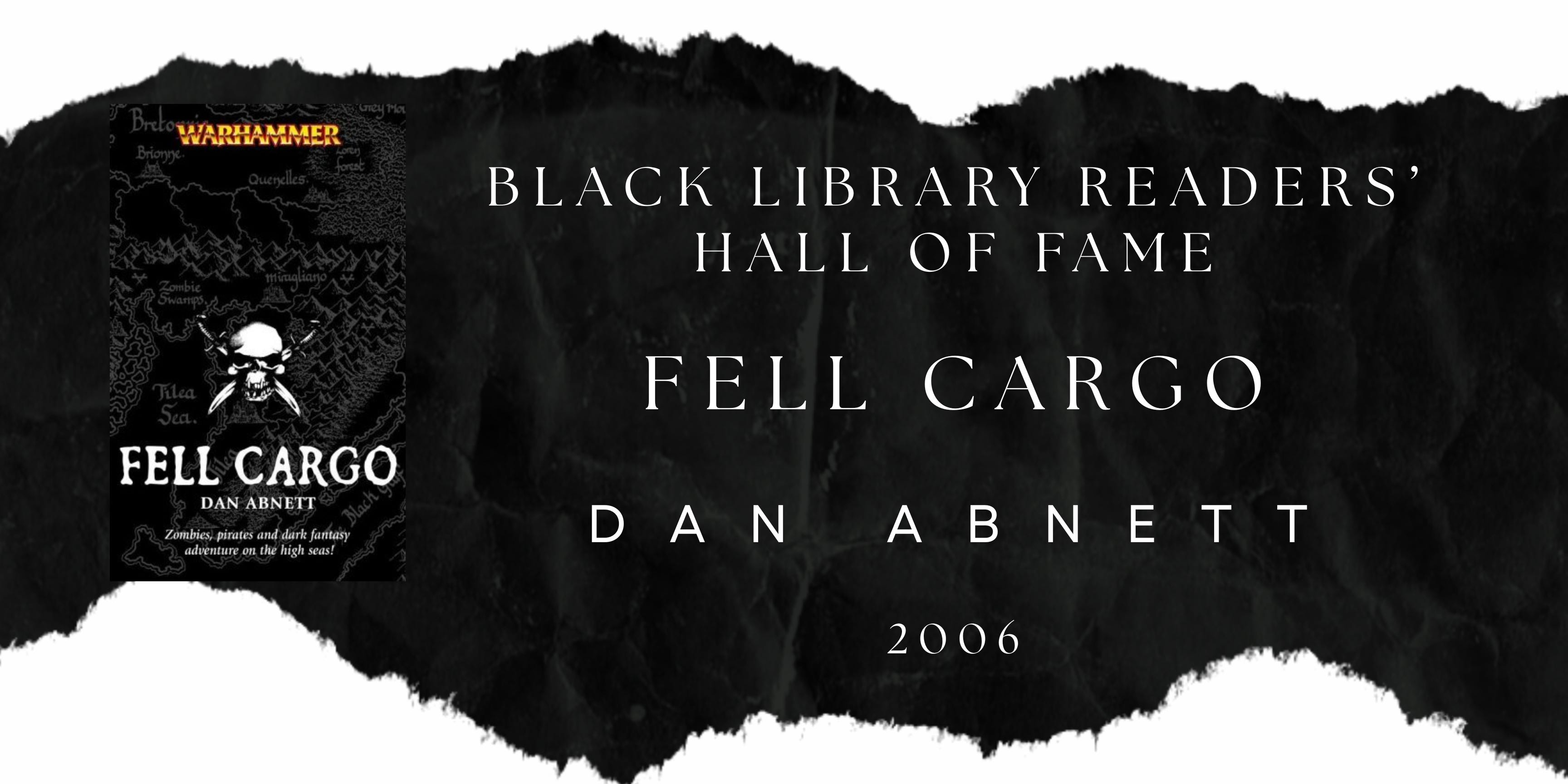
The Decline of Fantasy
This week I’d like to talk about the decline of Warhammer’s Fantasy property (as it pertains to the Black Library). Here we are entering the Class of 2009 this week, and for those keeping score at home we haven’t inducted a Fantasy title into the Hall since the first half of 2006.
Because of the binary nature of any Hall of Fame (you’re in or you’re out), this dropoff can look sharper then it actually is. Graham McNeill’s Heldenhammer and Nagash the Sorcerer by Mike Lee each got 55% of the voting this time around- just 5% shy of what they needed. Other books, like David Bishop’s A Murder in Marienburg and, frankly, just about anything Gotrek & Felix, manage to secure the popular support (Vox Populi) vote but come up short in the Committee.
But it certainly seems like the writing is on the wall.
In the early years of Warhammer fiction, Fantasy and 40K were roughly co-equal partners. While we don’t have access to sales and engagement figures inside Games Workshop, going by the external signs it’s obvious that at some point a burgeoning 40K began to shade out its less-thriving Fantasy nestmate.
There are a lot of reasons for this which I’ll dive into at a later date, but they include declining interest in the Fantasy tabletop game, the fact that Fantasy didn’t stand out in a crowded genre field the same way 40K did, and the talent shift over to 40K writing in the wake of the tremendous, unexpected success of the Horus Heresy line.
The Black Library tried to ‘capture the magic’ with the Time of Legend series, but it wasn’t enough. We all know how this story Ends, right? Blowing up the Old World. The dawn of the Age of Sigmar. And here in 2026, where the fantasy titles command about one-third of the overall Black Library support.
I’m a little disappointed that Heldenhammer and Nagash didn’t make the cut this time- but I also understand it. We’re running this Hall of Fame exercise now, not ten years ago, and there’s a certain survivor’s bias in play. Fantasy died, therefore perhaps its books were a little less “culturally, historically, or aesthetically significant” than if the property had survived. At 55% support, they’re forever going to be just on the outside of the window, looking in.
I’m looking forward to seeing how the perception of Black Library’s fantasy line changes with the introduction of the Age of Sigmar in 20151.
The Vox Populi Top Twenty
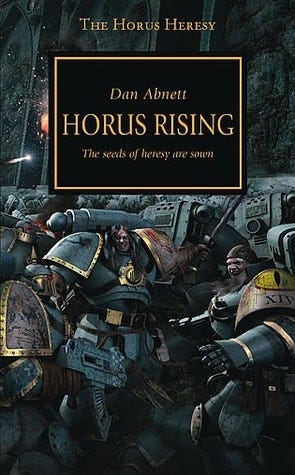
Both of 2008’s Hall inductees had a large groundswell of popular support, as evidenced by the fact that both made it into the Vox Populi Top Twenty.
As a reminder, this table ranks the books with the highest percentage of support in the public (VoxPop) polling.
Dan Abnett absolutely rules the roost here, and things like this really help put that into focus. This is particularly true in the modern era, where Abnett’s once-manic pace of production has greatly declined.
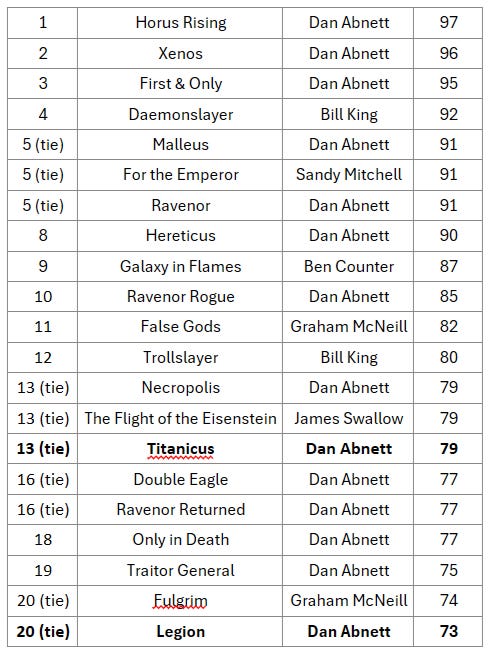
We must bid adieu to William King’s Skavenslayer, joining his Space Wolf, McNeill’s Storm of Iron and others that have been bumped off the table since we started keeping track.
And now with Abnett’s double win this week, here’s the updated author leaderboard:
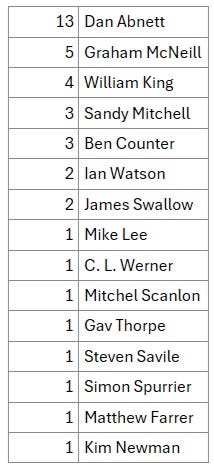
Abnett seems almost uncatchable, but there’s still plenty of time ahead. As his output declines and other notable authors start coming into their own, there’s every chance we could see the gap close. But in a sense, there’s a certain “antiquity premium” for those who get in on the ground floor. Shohei Ohtani is probably never going to be regarded in the same way as Babe Ruth, because Ruth was an exceptional talent at the (relative) dawn of the game.
In that sense, there will only ever be one Dan Abnett- but there’s still plenty of baseball to play.
Thanks for reading, folks! I love to see the enthusiasm and passion for this in the community matching mine. If you’d be so kind to grant a favor, would you mind helping get the word out for the 2009 Balloting? Share the link on social media, nudge your friends to vote, and so on. Having the article on TTB but polling over here is a little clunky (though understandably necessary), so I’d like to keep participation high while we work on ironing out the TTB site upgrade’s kinks.

At the current rate of publication, we should arrive at 2015 on 08 AUG 2026.
It would be interesting to hear more about the topic of the decline of fantasy book in Black Library. Was it a symptom of the overall decline in interest in the setting or more of a cause? At one point there were certainly a lot of solid fantasy books. Did the authors lose their muse with the setting? Does AoS have the same issue today? 40K and its associated timelines sure feel like they account for a lion's share of the books coming out of BL.