

Amongst the books hitting store shelves this week was Auxilia, the debut Black Library novel from author Russell Zimmerman. While he’d probably scoff at the assertion, Auxilia to me had something of an air of inevitability to it. After all, we’ve seen a number of authors traverse the short-story-to-longform pipeline, and Zimmerman’s Warhammer ascent has been about as by-the-numbers as they come.
The steps have evolved over time; from the pages of Inferno! we’ve progressed into digital shorts and then eShort Theme Weeks1, and it was one of the latter that first brought Zimmerman to writing Warhammer. Released as part of April 2025’s Heretic Astartes Week (review), Seven Ships offered up a tale of the Death Guard’s slow but inexorable spread of rot and contagion. That year also brought us his second piece, Resounding, which was included in November’s Death and Duty: An Astra Militarum Anthology (review).
Three more stories awaited us in 2026, first Answered Prayers in the pages of White Dwarf #525, followed by Swift Resolution. The latter story was interesting in that it was quietly published as part of the Warhammer Alliance website, a program aimed at helping Warhammer hobby groups get established in schools. While the site’s story content also included Born of the Storm by Edoardo Albert and Noah Van Nguyen’s Monster, those stories had been published before; Swift Resolution represented something new.
Finally, Burden of Excellence is the only brand-new story anchoring a collection of digital shorts getting the paper treatment in Treachery Unbound, the latest 40K anthology going up for preorder this coming Saturday (10/24).
Not only has Zimmerman been fairly prolific, but he’s also highly accessible, active in the different communities he writes for and enjoys (such as discussing BattleTech here at Tabletop Battles). He graciously agreed to an interview for the Warhammer Wordforge and we’ll be presenting it in two parts. Today we’ll be looking at his craft and background, then we’ll be taking a closer focus on Auxilia in an upcoming second installment.
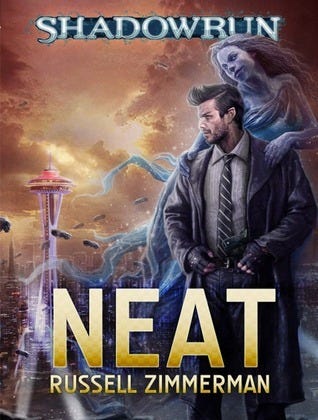
WW: You’ve been writing in shared sandboxes for well over a decade—from Neat in Shadowrun back in 2012 through BattleTech and now 40K. Day-to-day, what’s the actual difference in creative freedom (such as where the guardrails are) when you jump between a publisher like Catalyst and the Black Library?
RZ: I’m still getting a handle on that, in part because of the different scale of the operations, and in part because the majority of that Shadowrun and BattleTech fiction went through essentially one or two editors, a couple dudes I’ve been working with for ages now, and we’ve gotten very comfortable and confident.
With Black Library there’s a much more conservative, professional approach, with a lot more steps in the process and a lot more editorial input. There are novels I’ve gotten green-lit for Shadowrun after just a fact to face conversation hanging out in a hotel lobby at Gen Con or AdeptiCon. Black Library prefers a bit more structure and they want to make sure your idea’s solid before things progress.
WW: You’ve written extensively for FASA properties (BattleTech, Shadowrun, Earthdawn) and now you’re writing for Warhammer as well. Beyond the obvious aesthetic shifts, how do your storytelling instincts adjust when moving between settings? And when it’s time to write for a different IP, do you have to ‘deprogram’ yourself a bit?
RZ: Storytelling-wise, one adjustment is absolutely a matter of scale. Most of my Shadowrun yarns are about a hard-boiled noir private eye, and while Jimmy’s got a pretty sprawling group of supporting characters – ‘you are who you know,’ as the Shadowrun idiom goes – and that cast of characters includes his neighborhood, it’s still a jump to go from his stories, or other first-person narratives with Dash Red Clay or Kenji, from other Shadowrun stories… to a BattleMech company, with a dozen MechWarriors and all their supporting technicians and pilots… and then to an Imperial Guard regiment!
So that difference, zooming out to a bigger picture, juggling a larger cast of characters, still trying to make it all feel lived in and grounded and to make characters matter, that’s definitely a different idea.
My biggest life hack for switching gears from one property to another? Take advantage of my flexible schedule and awesome, indulgent wife, and I just submerge.
I go hard on whatever it is when I’m mentally switching from one genre to another. I watch movies that get me in the right headspace, I change up the video games I’m playing, and – of course – I hobby, working up kit-bashes and doing some painting for one army or another. Whatever I can do to get in the zone and stay locked in, I just bust out all that geeky stuff and focus.
WW: When you take on a setting you didn’t invent, how do you lock into its specific character? Is there a particular piece of background lore or a mechanical rule you hunt for to make sure the prose actually feels like that world?
RZ: Different game worlds definitely run on their own, to think of it in video game terms a little bit, ‘game engines,’ that’s for sure, and that’s definitely where familiarity with these games comes in, having it ahead of time.
Luckily for me this has never been, and never will be, ‘just a job,’ in that I already know and love the games that I decide to write for.
I didn’t stumble across Black Library on accident; I knew about Warhammer fiction because I grew up reading Warhammer fiction, just like with Shadowrun, BattleTech, Vampire, and everything else I’ve done.
WW: Every gaming universe has its default stock characters, from the stoic Space Marine, the cynical fixer, the weary detective. When you sit down to write in these settings, which trope are you most eager to tinker with or turn on its head?
RZ: I think instead of focusing on the tropes, I try to reach past each trope and find the humanity, the common ground that readers might have with these characters. That’s the important part to me, telling stories about characters folks are going to care about, are going to be able to – on some level – empathize with. Most of us aren’t super-soldiers or elven ninjas or driving giant robots for a living, so for me the important thing is to go past that surface level and find the things we do have in common with these characters; we all know what it’s like to work under a middle manager we don’t get along with, or we’ve all been new at a job and struggled to feel like we fit in.
As a historian, I’ve sometimes defaulted, with a shrug, mid-lecture, to a phrase like “people are gonna people,” as I tell students about young historical figures falling in love, or grieving the loss of a family member, or carving graffiti of dick jokes on ancient Roman walls. I think “people are gonna people” applies to Warhammer and Shadowrun and stuff, too. A lot of the trappings are very different, and the scale and nature of many of the problems they face, but at the end of the day, we’re writing stories about people, and that’s what can shine through.
WW: Writing in shared settings means you’re constantly building on what line developers and other authors are putting down. Has another writer’s take on a faction ever completely changed how you approached writing them yourself?
RZ: So far, no, but that’s partially down to the fact I tend to not pitch for a faction I’m not pretty comfortable with to begin with, and that comfort comes from being interested in them already, and staying pretty abreast of their fiction/lore. No one’s slung me a curveball just yet, or pushed anything through that’s required major rewrites or changes.
I write in big enough settings that I’ve so far been pretty able to just carve out my own little corner and play in it, not really upsetting the apple cart for anyone else, and not having my precious apple cart tipped over, either.
WW: When you’re writing in other’s sandboxes for a sustained period of time, how do you keep your own personal creative spark alive?
RZ: By enjoying the gig, at its heart. I don’t regret or resent playing in someone else’s sandbox, I get to play with sand, y’know?
I’ve joked for a long time that I think like a player, not a GM, and for those that maybe aren’t as into RPGs, lemme break that down a bit. In a tabletop RPG, the game master is the one that designs the whole world, and populates it, and creates a framework to challenge the players, and handles all of the monsters, and threats, and the repercussions of the players’ actions. What the players do is look at the information the GM gives them, look at the existing lore when they bust open a book to make a character, and they focus on making one dude, who fits into all that.
That’s still the headspace I’m in, when I’m writing a novel – I look at what’s already there, I look at the plot hooks in the existing lore, I look at the friction points and the things that would make a good tie-in spot, I look at the existing history… and that’s how I get my characters, my story ideas, my narrative structure. Writing Answered Prayers wouldn’t have happened if I hadn’t already had the War for Armageddon, and that canonical, existing, Armageddon Steel Legion, and their canonical, existing, push across open ground, etc, etc.
The stuff that’s already there, it’s not limitations that hem me in, it’s a framework for me to hang my story on, and it’s where I get my story ideas in the first place! It’s great, it’s like someone else does half the job for me, handles all the big picture stuff, and then I get to just look for neat spots and zoom in and fill in the cracks.
WW: You mentioned recently that Catalyst’s BattleTech romance line grew out of an almost-joke Valentine’s novella (Hungry Like The Wolf) into a legit series. As much as ‘Warhammer Romance’ is a fan meme, what can that experiment teach us about finding real emotional stakes in heavy military (or even grimdark) sci-fi?
RZ: I mean, more than anything else I think it just kind of shines a spotlight on the emotional stakes that are already there. It’s not like there wasn’t any romance in BattleTech until Valentine’s Day 2025 or whatever, when that first one came out, you know? The first thing Grayson Carlyle does when he sees an enemy MechWarrior in Willian Keith’s Decision at Thunder Rift is think about how hot she is, and then they fall in love and start a family. Mike Stackpole’s old stuff went on and on about this character’s chest hair and that character’s makeup and they had all sorts of forbidden romances and secret affairs and meet hates that turn from enemies to lovers. The foundational fiction of the setting is full of romances, and all the stompy robots and lasers and hex maps don’t take that away.
And I think the same’s true in Warhammer, honestly.
There have been decades of talented, skilled, professional writers telling weird, wild, war stories, sure, but they’re also telling stories about people, and – if I can quote a not-so famous historian from about ten minutes ago – “people are gonna people.”
And that means sometimes finding love, or at least lust, even under stressful circumstances and in a grimdark setting. There’s always been room for romance in Warhammer fiction, and I think we’re hitting a cool era, with a fan base that’s getting a little older and a little more grounded on average than maybe it used to be, that’s more and more okay with that.
WW: In settings as dense as 40K or the Sixth World, extended lore dumps can easily kill momentum. What’s your rule for deciding what not to explain, and how do you trust the reader to pick up the context of an ancient Imperial institution on the fly without getting lost?
RZ: On that one, I lean on editorial a little more than normal. I’m not afraid to ask them, ‘hey, what is this story for, again?’ Writing something for White Dwarf or Warhammer Academy, you have a different set of assumptions about faction familiarity (of course you also have different assumptions about available word count, too!). But yeah, exposition is…tricky. It might be the trickiest part of this whole gig, honestly.
But I think the answer is that it really comes down to each project, and to each lore question you might have – how much room do I have to explain it, how common is the knowledge, how crucial is the knowledge to getting the story, to understanding the stakes, the twist, the threat? It’s different every time, and sometimes you nail it and, I know some folks will point out, sometimes you don’t.
But you’ve got to weigh a lot of different qualifiers when you’re deciding on explanations and exposition. It’s definitely an art, not a science, and I don’t think there’s a hard and fast rule, I’m afraid.
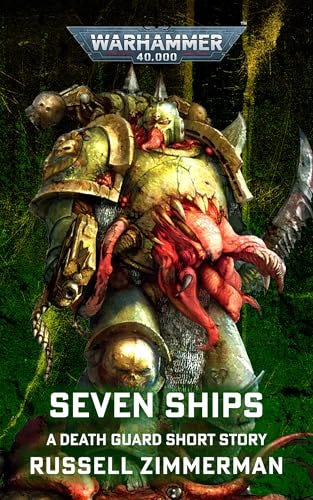
WW: Your Black Library debut Seven Ships stood out during Heretic Astartes Week because it skipped immediate bolter action for a more reflective character study of an agri-world survivor (review). Why was that perspective the right way to introduce readers to Mortarion’s legion?
RZ: Well, first off, thanks for thinking it was the right way! That means it worked okay. I wanted that sort of slow, crawling, dread, rather than quick staccato action, specifically because that’s how the Death Guard are, and how they should feel, I think. It’s kind of an extension of their tabletop vibe, right? Low movement speed, but a slowly expanding aura of oppressive dread? It’s kind of their thing, this inexorable, crawling, threat.
So there, I took the risk and I wanted the pacing of the story to match the pacing of the characters in the story, basically, and I’m glad to hear that, for you at least, it worked out!
WW: In both Seven Ships and Resounding, you lean heavily into sensory horror from the oppressive atmosphere of illness to (my personal fave) the glint of mucus on a visor. How do you write Nurgle’s corruption so it feels genuinely unsettling and atmospheric rather than just cartoonishly gross?
RZ: I worked really hard at it, and I still wasn’t sure how I managed it. It’s definitely a harder balancing act than most, it feels like. I know I did multiple editing passes just looking at adjectives, just looking at describing monstrosities, just making it all worse. It was something I really wanted to nail, and it came down to really trying to make the grotesque so absolutely common that it was kind of taken for granted by our narrator, showing how twisted he was getting on the inside (as much as others were on the outside).
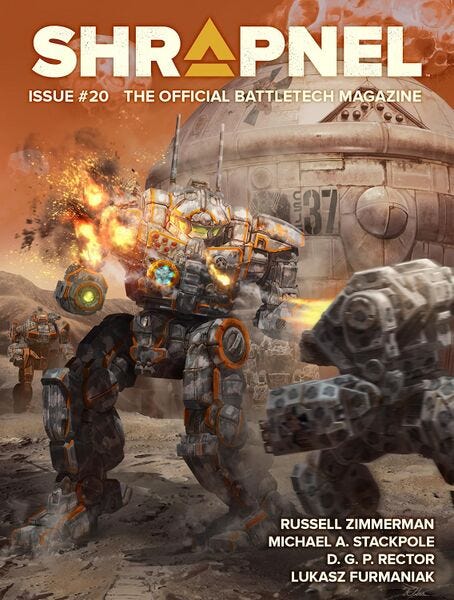
WW: Seven Ships co-won Best Debut at the 2025 Goonhammer Book Awards alongside Avalon Irons’ Imperfect Engines. (You also co-won Best Non-GW Tie-In Novel for Violent Inception with Bryan Young).
Considering how tough the short story proving grounds can be for new writers, what did that immediate reader response mean to you while you were gearing up for the things to come?
RZ: Uhh…everything? It meant everything, honestly, being in good company just being picked and listed at all, but then being neck and neck with Avalon, being neck and neck with Bryan, it was just really fantastic.
Avalon has turned into a really cool person to chat with as we’ve both moved from project to project and we excitedly bounce ideas off each other, and Bryan and I hang out every chance we get, we’ve been friends for years at this point, and knowing how hard working they both are, and how absolutely great at this job they are, it was really something sharing the pedestal(s) with those two.
The fan response has been fantastic, not least of which because it felt like Seven Ships was hard to write, like I said. I managed to start with a real uphill climb as my first Black Library work, but when other folks thought I nailed the landing, that was when I really felt like I’d nailed that landing.
One of the coolest things anyone said over on Reddit was that they thought Seven Ships was part of Chris Wraight’s Death Guard stuff – that was when I really, really, felt like I must have done okay with it, and treated the Legion well.
WW: The climax of Answered Prayers delivers some cruelly grimdark irony [SPOILER]: the stranded crew calls for help and gets ‘saved’ by Blood Angels- only for them to be Death Company who purge the Guardsmen right alongside the Orks. How did you calibrate that twist so it felt like an earned payoff rather than just shock value?
RZ: I think the trick I pulled there was just making myself do it. Not over-explaining it, not dragging the moment out, just yanking the tooth very matter-of-factly. A squad of Death Company against half a unit of Guardsmen? It’s over in no time flat, right?
Most game tables, you wouldn’t even necessarily have to roll the dice, odds are your opponent would just say “ugh, you want me to just pull my Guardsmen?” And I wanted that to hit, I wanted it to hit that fast and that hard. And that meant not giving myself the time to slow down and explain it, just to make it happen, and move past it, and then take time after the carnage to feel a little shock, and then… to hit home the universe, to basically make our survivor just shrug and have no choice but to keep going.
Because what else is there for him to do? The unit’s not even a footnote, the attack itself is probably not even a footnote, in the grand history of the planet. What’s another half-dozen deaths, in the middle of Armageddon?
So I didn’t want to dwell on it while it was happening, and in a way I couldn’t overdo dwelling on it after the fact, either. The war had to keep on churning. The world had to keep on turning.
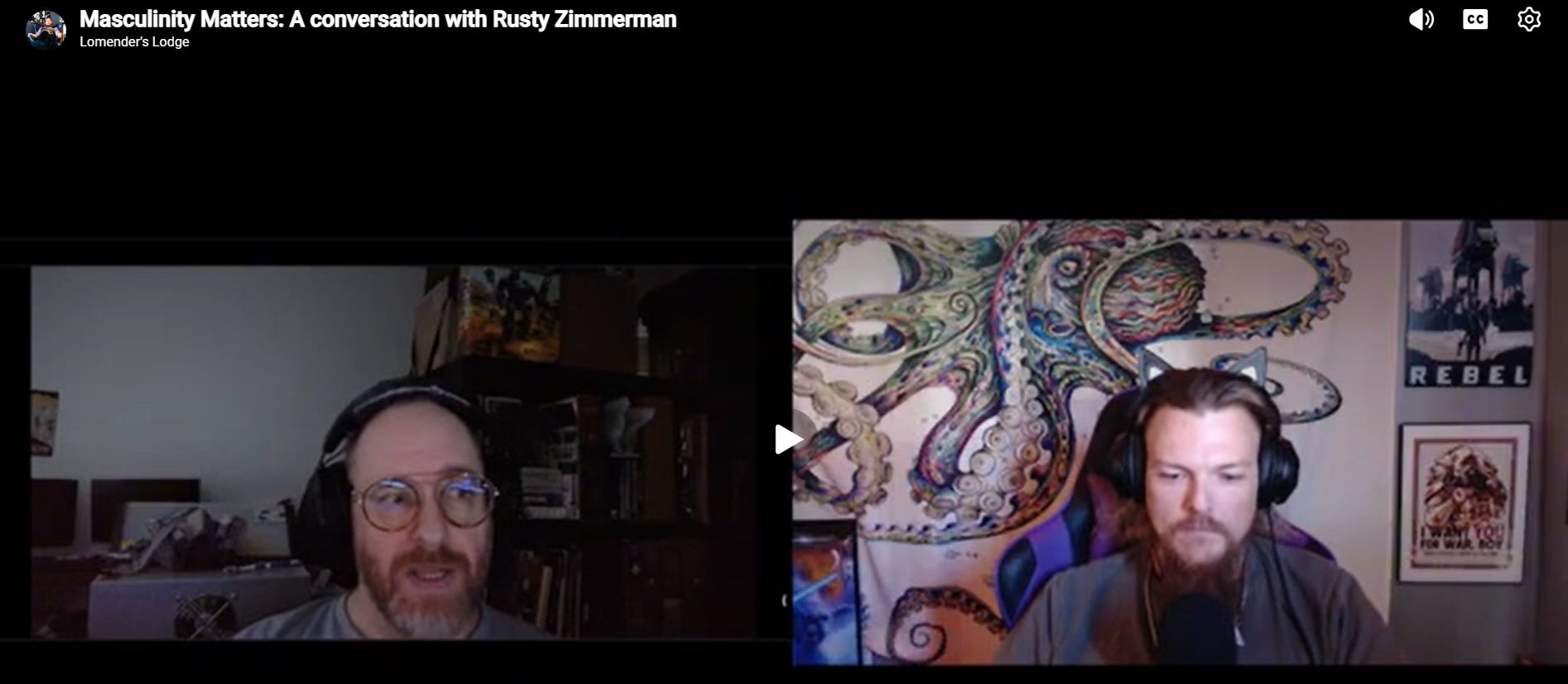
WW: You spend a lot of time on streams and podcasts (like Rookery, Lomender’s Lodge, and Second Circuit) and doing interviews talking shop and breaking down the mechanics of storytelling. Why is being so open about craft and the writing process important to you?
RZ: Because I don’t think any of this should be a secret. Because I don’t want anyone to think they can’t do it, too. Some of my favorite panels I’ve ever done are when there’s multiple writers, and we’d all break down our process for a novel, and they’d all be so different… and I loved that, because the take-home was always “so find what works for you.”
My buddy RL King treats writing like work, sits down at 9:00 am, writes until 5:00 pm, you know, that type of schedule, sticks with a really disciplined regimen. That’s what works for her, and her output is awesome, and her content is fantastic, and it’s all great. I…don’t do that. She’s a ‘damage over time’ writer, I’m a ‘burst damage’ writer, I have a whole different process, that sounds insane to her, but is what works for me.
And I love when we tell people that, when a group of writers tells people that, because you can kind of see a little lightbulb go on, and there’s this ding, and people realize there’s no one way to do this gig, there’s no one right way, and I hope that’s really liberating for them.
So yeah, I’m just not afraid to be honest about the process, about how there’s not one way to do it, there’s not one answer, and that I’m not special, that we’re not special, for doing it.
What a lot of us are is lucky, because we get to do it, because we have spouses that supported us learning how to do it, and friends that encouraged us, and we have talents that made it easier for us to turn those talents into skills.
But it’s not magic, it’s not impossible. We’re just geeks, too. And we’re all just geeks that found a method that worked for us, and that put in the time to get better at it.
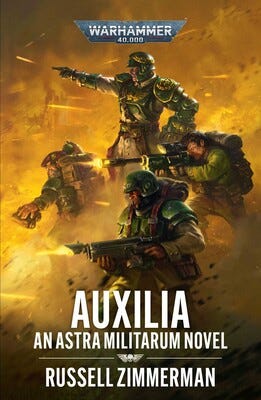
WW: That concludes the first half of the interview with Russell Zimmerman, and we’ll be back later with a deeper dive into Auxilia. Thanks again to Zimmerman for the generous gift of his time and candor!
Those ceased last year. What replaces it as the ‘proving ground’ for new authors remains to be seen, which is a story I’ve covered extensively in my column Black Library Weekly.
Excited to see an author interview on here! Very interesting to hear how he brings gaming into the writing like pacing the story to match the pacing of the faction in 40k tabletop. Also when he said “I think like a player, not a GM”. I could see how that would make for a more interesting novel vs more of a setting book. Very cool!