
One of the tactics I have employed in my enjoyment of the Black Library is the act of appreciating what I don’t know just as much as what I do.
You only ever get to experience something for the first time once. Rather than absolutely mainline fluff and lore like a fiend, I’ve moved sought to go deep rather than broad. There are entire chunks of the lore I’ve barely scratched the surface of, and as a result there’s still a lot of joy of discovery still awaiting me in the grim, dark future.
One of those areas is the Dark Angels. Another is- and this may surprise some- the Horus Heresy itself. The mainline series comprises 54 books. As of this posting, I’ve completed just eleven of them.
Aural Arguments
I’m late to the party with audiobooks. I’ve always preferred the tactile experience of reading. The smell of the paper. Holding a book in my hands. Turning the pages.
My discovery of the audiobook format came when I realized that the majority of my Black Library reading is in service to writing book reviews for Goonhammer. That’s no complaint, mind, just a recognition that I’m typically at the bleeding edge of the Black Library’s release schedule since people most want to read reviews of new books. If I ever wanted to “play catchup” and go deeper into the catalogue, I was either going to need to ease up on the reviews- or find a more creative solution.
I chose the latter, treating myself to the audiobook of Aaron Dembski-Bowden’s Helsreach. Jonathan Keeble’s extraordinary voice work- in particular his portrayal of Steel Legion Storm Trooper Andrej Valatok- made me realize that audiobooks could offer something entirely different from the paper experience. This wasn’t just narration, it was acting.
Audio Impressions will be an occasional series I’ll add to the Dispatch after completing a new audiobook. Neither a full book review nor a blurb, but something in between.
Impressions.
The Book
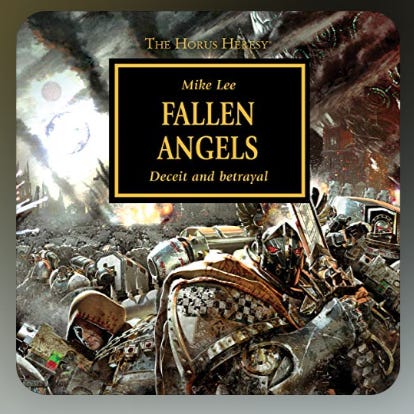
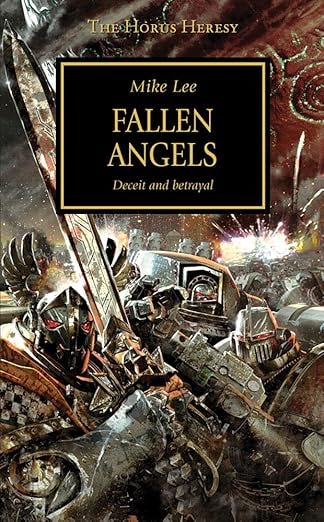
As I noted earlier, I haven’t managed to get all that far in the Horus Heresy series. The audiobook format has offered a terrific opportunity to continue my slow crawl through one of Warhammer’s most epic stories. This week that saw me return to the planet of Caliban, home of the Dark Angels, in Black Library Readers’ Hall-of-Famer Mike Lee’s Fallen Angels as narrated by Gareth Armstrong.
While it took more of a supporting role than a starring one, which it did in Mitchel Scanlon’s Descent of Angels (Horus Heresy book six), the planet and its Great Beasts still had a role to play in the story as we learn about the interrelationship of the world and beasts- and why Lion el’Jonson’s eradication of them seemed a classic case of the Law of Unintended Consequences.
Descent of Angels centered on two cousins, Zahariel and Nemiel, and their ambition to become Knights of the Order, and both return to drive Fallen Angels’ parallel story paths. It’s here author Lee did some of his best work, as the action flip-flops between Zahariel and Luther on Caliban as they confront an armed rebellion on the planet, and Nemiel with el’Jonson’s forces in the Great Crusade as they unravel the extent of Warmaster Horus’s treachery on the forge world of Diamat.
Lee’s pacing and sense of when to pivot to each half of the tale is terrific, as neither overstay their welcome and resolve their central mysteries at a comparable- and quite engaging- cadence.
It also served as yet another example of why the Imperium is, in so many ways, its own worst enemy. I generally like to keep things spoiler-light, so I’ll just say that the catalogue of problems it must content with that it itself precipitated is delightfully long. Luther’s fall from grace didn’t have to happen, but as you learn what he does it’s hard to fault him entirely.
The Narrator
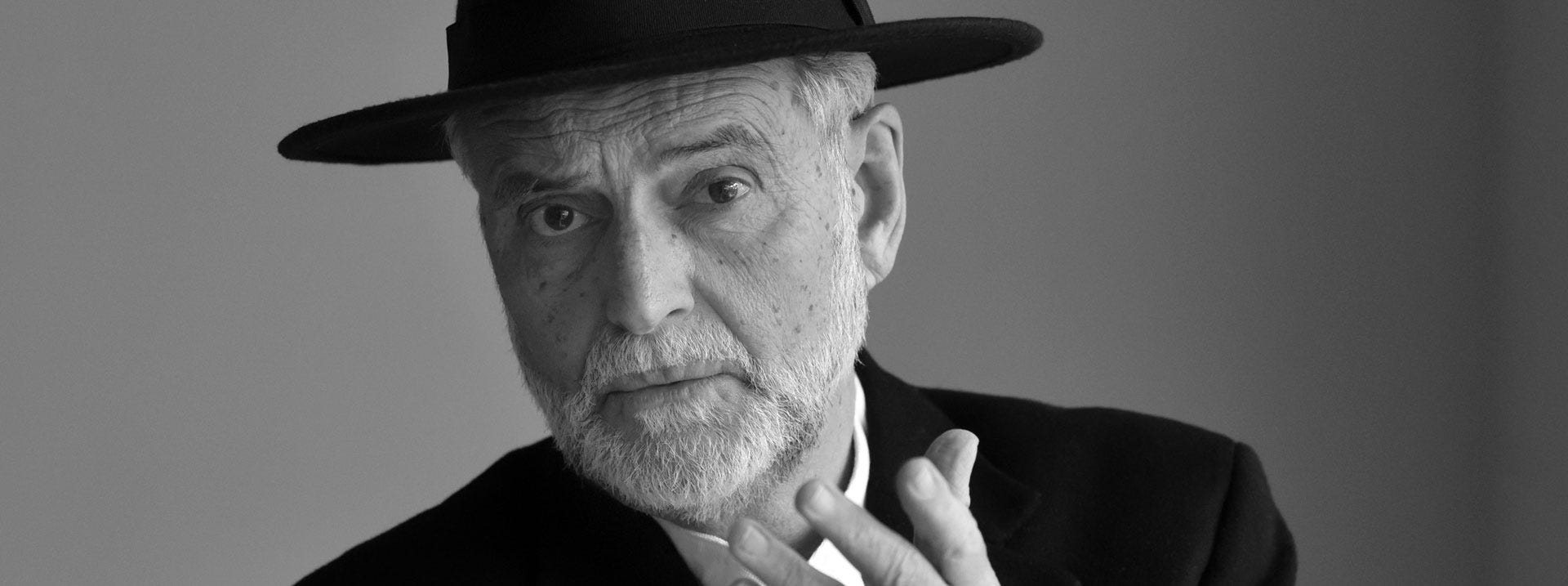
I found Armstrong’s performance here somewhat hit-or-miss, feeling that he has a terrific natural voice which he leans into for characters like Luther and el’Jonson. Indeed, his Luther, with his rich timbre and rolled r’s, is the book’s most electric performance, and his natural reading voice is a pleasure to listen to.
But whereas some narrators will use accents to differentiate characters, Armstrong instead relies more on pitch and cadence- with much more mixed results. Zahariel and Nemiel in particular often sounded unimposing, at times more like a short-of-breath old man shouting rather than a towering transhuman warrior issuing decisive battlefield commands. I suspect Armstrong might be a better fit for books with a smaller cast of characters, and given the breadth of his body of work in the Heresy I’ll have a number of opportunities to put that theory to the test.
All the same, I found this one a very solid entry in the series, nicely filling in the backstory of the Dark Angels (and seeds of what eventually becomes The Fallen) on the back of a pair of fairly gripping narrative arcs.
Fallen Angels was Mike Lee’s sole contribution to the Horus Heresy novel series, though he would also pen the novella The Crimson Fist as well as short stories. For more on this title, also make sure to check out Mira Manga’s in-depth conversation with Lee.
Thanks for reading! If you’ve read Fallen Angels in either format, I’d be keen to hear your thoughts!
I know the Dark Angels arc in the Horus Heresy gets some criticism, but I *loved* Caliban as a setting, and seriously felt for the loss of it. It's just such an interesting setting in of itself.