
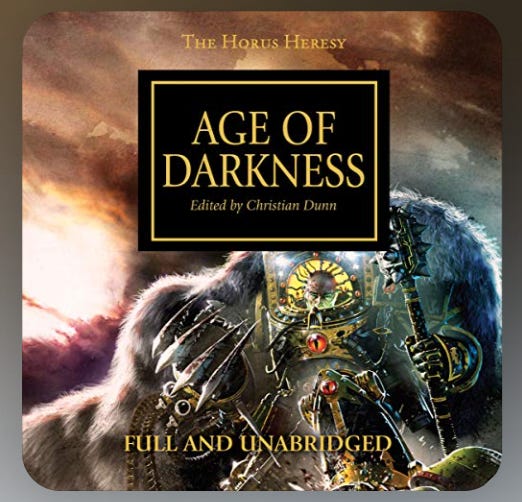
With much of my contemporary reading in service to writing reviews, audiobooks are my chance to “play catch-up” on the older catalogue of Black Library books. What you will find in this occasional feature is neither a full, formal book review nor a simple blurb, but rather something comfortably in between: impressions.
Subscribers note: You are receiving this email since you’ve subscribed to the Black Library Features segment of the Warhammer Wordforge. You can easily update your notification preferences here at any time. Thanks for reading!
With my road trips to Houston becoming more of a regular thing, it’s been a great time to make good progress on the Horus Heresy. Originally released in May 2011, Age of Darkness is both the sixteenth book in the mainline Heresy series as well as its second anthology.
The volume contains nine short stories from some of the Black Library’s biggest hitters, and indeed six of them have been enshrined within the Black Library Readers’ Hall of Fame. For the audio talent, we get readings from Gareth Armstrong and Jonathan Keeble- both of whom we’ve profiled before in this series- but also one narrator that we haven’t.
Until now.
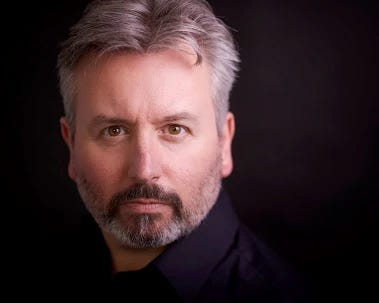
A New Voice
Banks’s background, like many of his peers, shows early theater and small-screen production credits (including Coronation Street and Footballers’ Wives) eventually giving way to finding a real stride in voice acting. Listed in nearly a hundred episodes of various Doctor Who podcast dramas, he’s also played Inspector Lestrade in the Sherlock Holmes series by Big Finish Productions.
His body of work for the Black Library is similarly extensive. He’s been the primary narrator for the Dark Imperium and Dawn of Fire series, the Watchers of the Throne Series, and plenty more. I find his range to be comparable to Gareth’s Armstrong, in that he has a strong reading voice and can carry a small number of characters, but struggles a bit in differentiation for stories with a larger cast.
That said, there are some voice actors that have fully claimed particular characters for me, such as Jonathan Keeble’s Gotrek or Stephen Perring's Commissar Cain. To this august company I must add Banks, whose Roboute Guilliman exemplifies the sound of this most analytical warrior and statesman.
It’s worth noting, too, that Banks isn’t just a professional putting in a shift. It’s always gratifying to learn that the creative talents bringing Warhammer to life are themselves fans, and as he shared in a Doctor Who podcast he’s a great fan of the lore and enjoys playing the game (though he admits to being challenged at assembly and painting).
To anyone who’s ever thought, “they’re just reading a book, how hard could that be?”, here’s what Banks has said before on what his workday can look like.
I've been preparing two audio books for The Black Library. In their different ways, both presented a considerable challenge and after a re-jigging of the original schedule, I found myself recording both books in a single week. That in itself is quite a challenge, both physically and mentally. Sitting in front of a microphone for seven or so hours a day, fully concentrating and articulating some tricky text, along with creating voices for over 70 named characters, certainly draws heavily on stamina. One of the effects of such concentration, which I must say, I do thoroughly enjoy, is that time seems to evaporate; a full day in the studio feels more like a couple of hours and it often comes as a bit of surprise that the working day has come to an end.
“Seventy different voices” certainly gives one pause for thought, let alone having to speak for seven hours a day, every day. For all that effort, though, we get some truly enjoyable stories- including three of the ones we’re looking at today.
The Stories
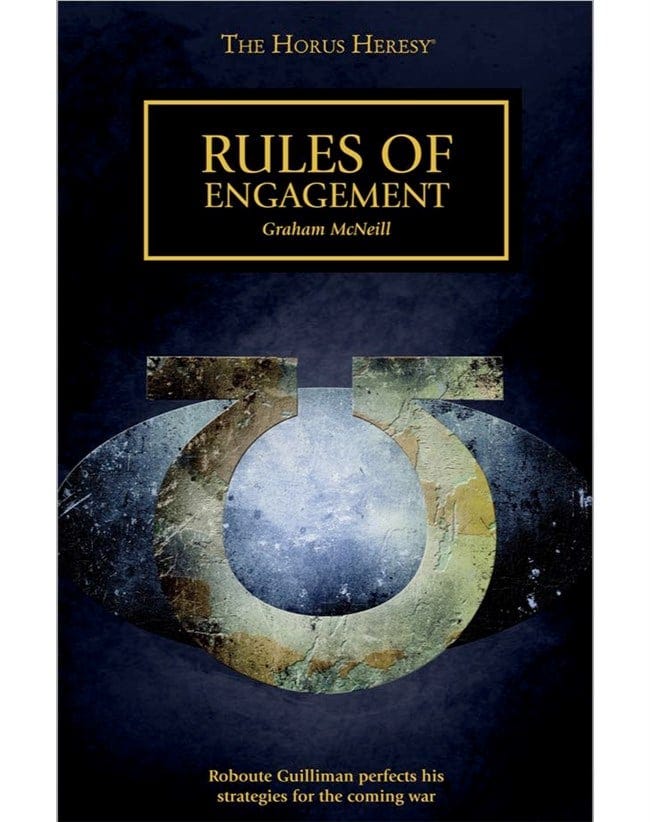
Rules of Engagement, by Graham McNeill
Narrated well by Gareth Armstrong, this was an excellent opener to the anthology. One of the things I appreciate about McNeill is that he’s interested in some of the more esoteric elements of the Warhammer universe. We’ve seen this with A Thousand Sons and the legion’s mysticism, his diving into the Cult Mechanicus with Mechanicum, and now here in Rules of Engagement we get a story about… the Codex Astartes.
Trust me, it’s way more exciting than that probably sounds. Guilliman has completed what is destined to become one of the Imperium’s most influential works, and now it must be put to the test. Outstanding.
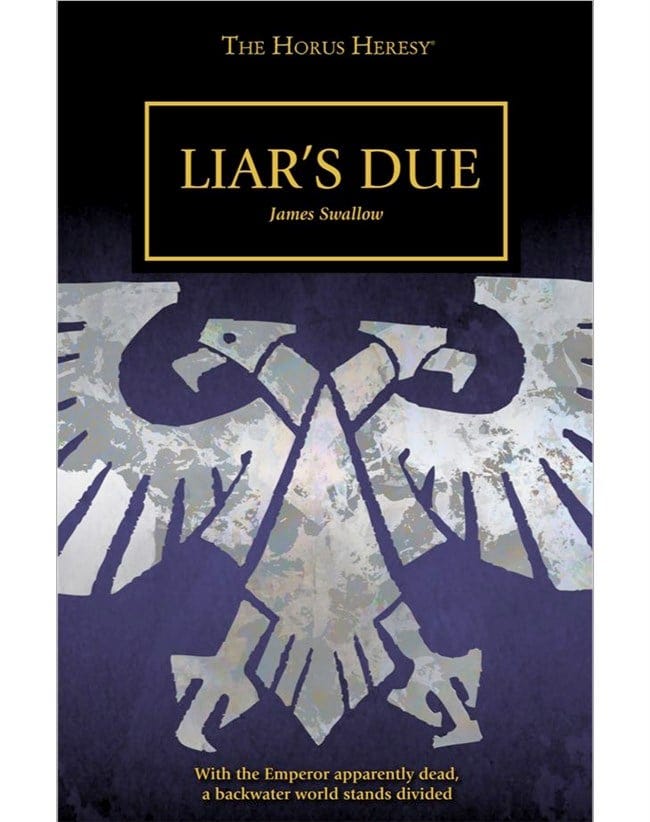
Liar’s Due, by James Swallow
When Orson Welles broadcast the War of the Worlds radio drama back in 1938, it famously caused a national panic. Much of the story of a Martian invasion of Earth was presented in news-broadcast format, and listeners who didn’t catch the disclaimer at the start of the show might be forgiven for thinking something momentous and terrible was happening.
It seems a bit silly in hindsight, of course, but in fairness it was already a time of popular instability. The Great Depression, the Lindbergh kidnapping, the Hindenburg disaster, tensions in Europe… the pot was already simmering a bit. James Swallow channels this event through the Warhammer lens, telling a story of a series of news broadcasts heard by an isolated mining colony reporting that Horus Lupercal has accepted the surrender of the Emperor. I’ll give you twenty guesses at who might be behind it such a thing, but I suspect you’ll need no more than one.
Jonathan Keeble is terrific here, as ever, and this one’s another terrific tale.
Forgotten Sons, by Nick Kyme
Not every Warhammer story needs to be profound- indeed, most aren’t, though a surprising amount have their moments. If there’s one kind I have high expectations for it’s those that trade in their bolters and power swords for the cut and thrust of spirited debate.
When I reviewed David Annandale’s recent Word Bearers tale, Apostle, I was impressed that the author took a genuine attempt at serious religious conversion.
Let’s be clear, nobody’s reading Apostle looking for The Screwtape Letters here. Annandale could easily have hand-waved the conversions with little impact to the story. For example: “Cerastes countered her every objection, answered her every question, and when she had run out of both there was nothing left save for the embrace of what had once been unthinkable.” Nobody would likely feel terribly cheated at that.
To his credit, Annandale instead takes a real run at this. Opting to play out the debate and battles of wits that are required for a genuine religious conversion of the wary and unwilling, he gives us a real look at the parry-and-thrust of a conversation between Cerastes and his eventual disciples as he severs their attachment to the Emperor- and replaces it with something far more sinister.
Sure it didn’t land as well as I’d hoped, with the conversions feeling far too easy than they should have- but I could credit the effort. The same here with Nick Kyme’s tale of a planet having to decide between siding with Horus or remaining loyal to the Imperium. Ultramarine Arcadese and Salamander Heka’tan have been tasked with acting as representatives for the Imperium, facing off against an iterator (orator) from the forces of the Warmaster to debate and persuade the planetary council to declare fealty to one side or the other.
It’s an interesting concept, and in fairness Kyme doesn’t make any pretense as to the speaking skills of the Astartes, but there was a great opportunity here for some stirring prose from both sides and it never really came together. The ‘arguments’ from both were fairly pedestrian affairs, of interest only because they did a good job referencing events of previous books in the series such as the destruction of Monarchia (The First Heretic, by Aaron Dembski-Bowden) and the assassination attempt on the Warmaster at Dagonet (James Swallow’s Nemesis). A shame.
Nor did much else really work for me on this one. Both of the story’s ultimate villains were a bit too moustache-twirly, though this one makes good question material for a Warhammer Pub Quiz due to the presence of a rare, shapeshifting xeno known as a Lacrymole. That’s one thing I love about the Horus Heresy setting is that it can feel like Star Wars with the wider variety of xeno species present in the universe (at least, before the genocidal Great Crusade snuffs many of them out.)
John Banks read this one, and was in his element with the smaller cast and wide range of tones (from oration to combat).
The Last Remembrancer, by John French
Interrogation stories make for good drama, which John French plays for maximum effect here in the story of a remembrancer found inside a Heretic Astartes ship, drifting into the edge of the Sol system. Rogal Dorn assumes responsibility for the interrogation personally, and must come to understand for what purpose the Warmaster sent him.
With a cast of three, this kind of drama is a perfect fit for Gareth Armstrong, and this one is like what NPR has referred to as “driveway moments,” news stories that when you’re listening in your car and pull into the house, you sit and listen to the rest of it because you’re so riveted.
Rebirth, by Chris Wraight
It’s difficult to discuss this one without giving away the story’s great reveal, so if you’d like to preserve the mystery I’d invite you to scroll down to the next one.
Chris Wraight plays with expectation here in another interrogation story, this one involving a member of the Thousand Sons captured while nosing about the ruins of Tizca searching for signs of Magnus, his Primarch. The reader sits alongside Kalliston through the story, with the identity of the interrogator concealed from both.
Wraight’s misdirection in the story is that you’re led to believe he’s been captured by Space Wolves, but in the story’s reveal you discover instead that it’s Khârn of the World Eaters, himself on a secretive mission in the ruins of the Thousand Sons homeworld. The writing is masterfully done, the reveal pulled off expertly, but I didn’t think that John Banks was the ideal fit for this one. He doesn’t have quite the “wet leopard growl” sound of the Space Wolves (or, for that matter, what I’d expect from the World Eaters).
The Face of Treachery, by Gav Thorpe
Nicelty performed by Johnathan Keeble, this one was really interesting. While many of the Horus Heresy stories stand entirely on their own, some of them carry a significance that’s not always obvious on first reading. This one is a perfect example (some spoilers ahead).
On the face of it, it’s the story of how Corvus Corax was rescued from the surface of Isstvan V following the Dropsite Massacre. That’s already highly consequential to the future of the Heresy, but it gets better. As the World Eater ship closes in to intercept the Raven Guard rescue vehicle, they’re thwarted at the last moment by a sleeper agent from the Alpha Legion.
Now, if you’re going in book order through the Heresy, you know from Legion that there’s a certain ambiguity of allegiance with Alpharius’s lot, and this is played here as the Alpha Legion putting their thumb on the scales to ‘preserve the balance’ of the conflict. But the deeper motives won’t make themselves known until later, in Gav Thorpe’s Deliverance Lost (Heresy #18).
It can be tempting to assume that short stories are in some ways less consequential than novels, but you sleep on them at your own peril.
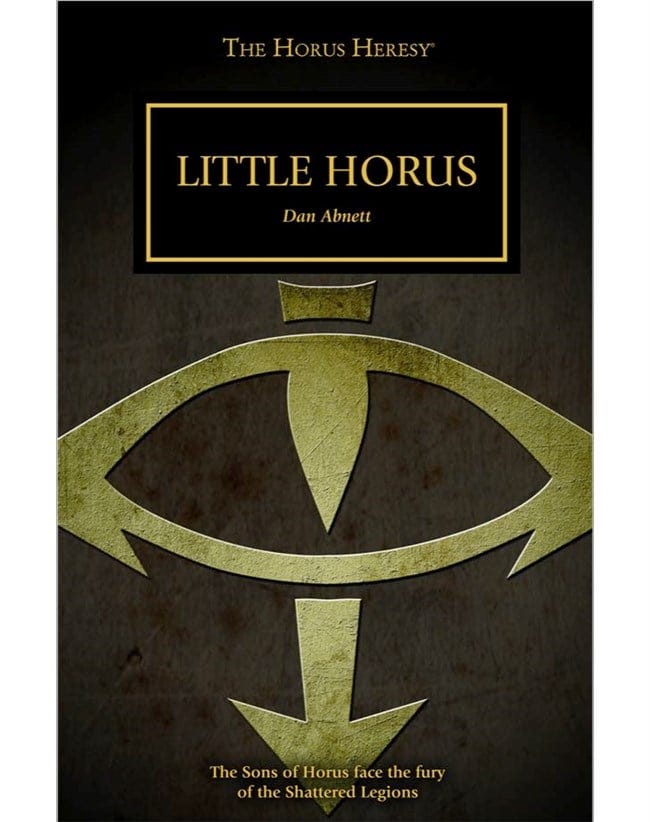
Little Horus, by Dan Abnett
This was another consequential story, one that tells the tale of ‘Little’ Horus Aximand, onetime member of the Mournival, and his eventual embrace of Horus’s treason. The events of Isstvan III and V weigh heavily on his conscience, but as he hunts down survivors of Isstvan V a single swing of a sword will change the face of things to come.
While it’s written by Dan Abnett, this one was a miss for me. Part of that was the narration, which again was delivered by John Banks. Neither story nor delivery were bad, per se, but they suffered a bit following in the footsteps of some real bangers.
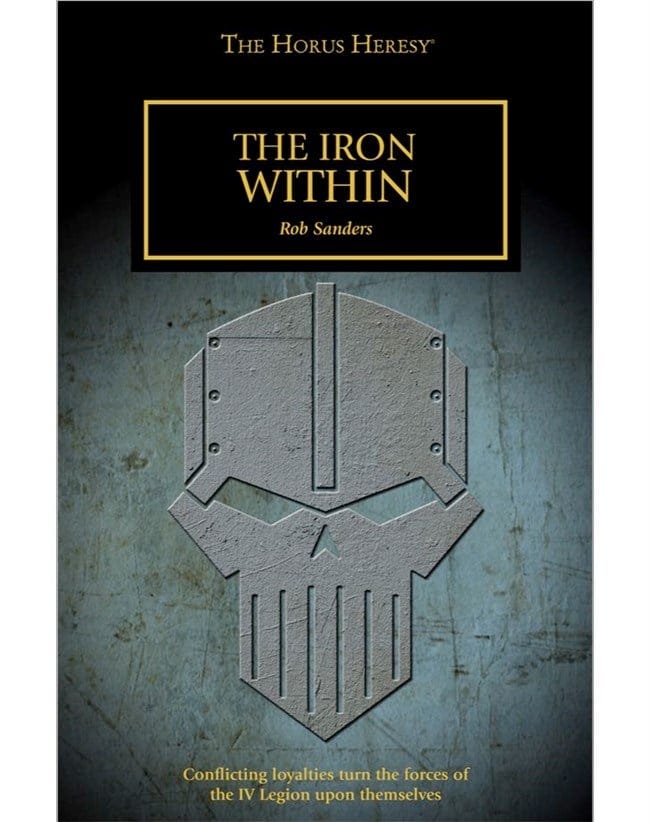
The Iron Within, by Rob Sanders
And here it is, my “best in show” story for the collection- and delivered by Jonathan Keeble, no less. You don’t get a lot of stories that focus on the Loyalist remnants of the Heretic Legions, but this one is fantastic.
It features Barabas Dantioch, a Warsmith of the Iron Warriors out of favor with Perturabo and exiled to lead an outpost on a remote backwater. With characteristic Iron Warrior determination, Dantioch has taken his punishment detail seriously, building an extraordinary work of military engineering in the construction of a fortress, the Schadenhold.
When a delegation of Iron Warriors loyal to Horus arrives, everything Dantioch has built- and everything he is- will be put to the test.
I loved this story, with its clash of Iron Warriors both sieging and being besieged. Another “driveway moment” story, once things kick off you won’t want to hit the pause button.
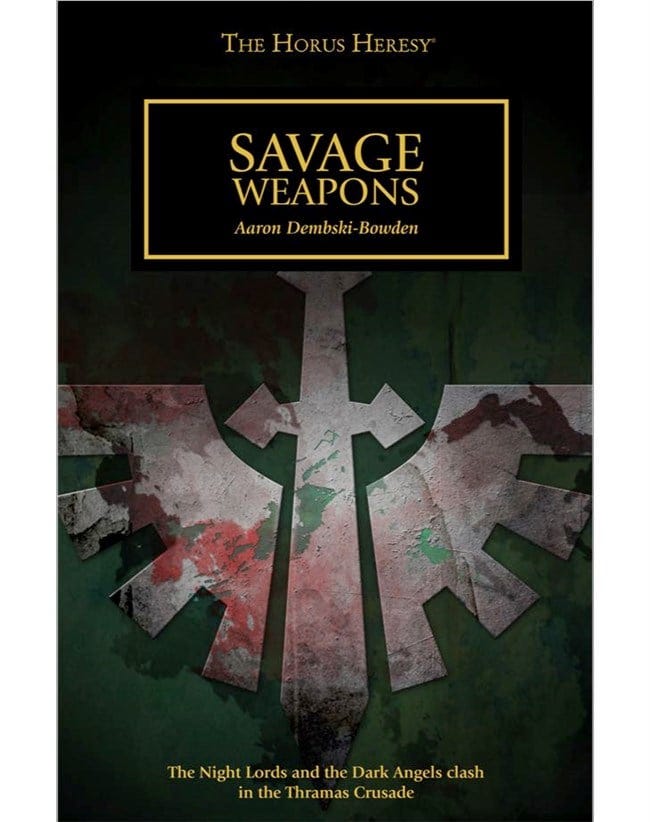
Savage Weapons, by Aaron Dembski-Bowden
Set in the Thramas sector, this one pits the Dark Angels against the Night Lords. Konrad Curze, Primarch of the VIIIth, reaches out under flag of parley to his opposite, Lion el’Jonson. Meeting on Tsalguasa with the barest of honor guards, much of the story involves a conversation between the two giants.
It’s hard to imagine such a chat ending in anything other than conflict, so you won’t be surprised that things soon go sideways. A sword is drawn, blood is spilled, and a head is taken, with Gareth Armstrong doing right by the narration involving two very different sorts of men.
Aaron Dembski-Bowden is well-loved for his ability to portray those wayward souls that have broken with the Imperium, and he’s in full form here. This is an excellent story, and a great way to conclude the anthology.
Overall, I found Age of Darkness to be a terrific collection. I was a bit wary going in given that I didn’t love the previous anthology, Tales of Heresy1, but this collection felt a lot stronger and more tied in to the ongoing narrative in many ways. The narration was a bit uneven in places, but overall an easy title to recommend.
The Last Church, however, remains one of the best shorts I’ve ever read in Warhammer, and is scintillating work in audio form from a Keeble in top form.